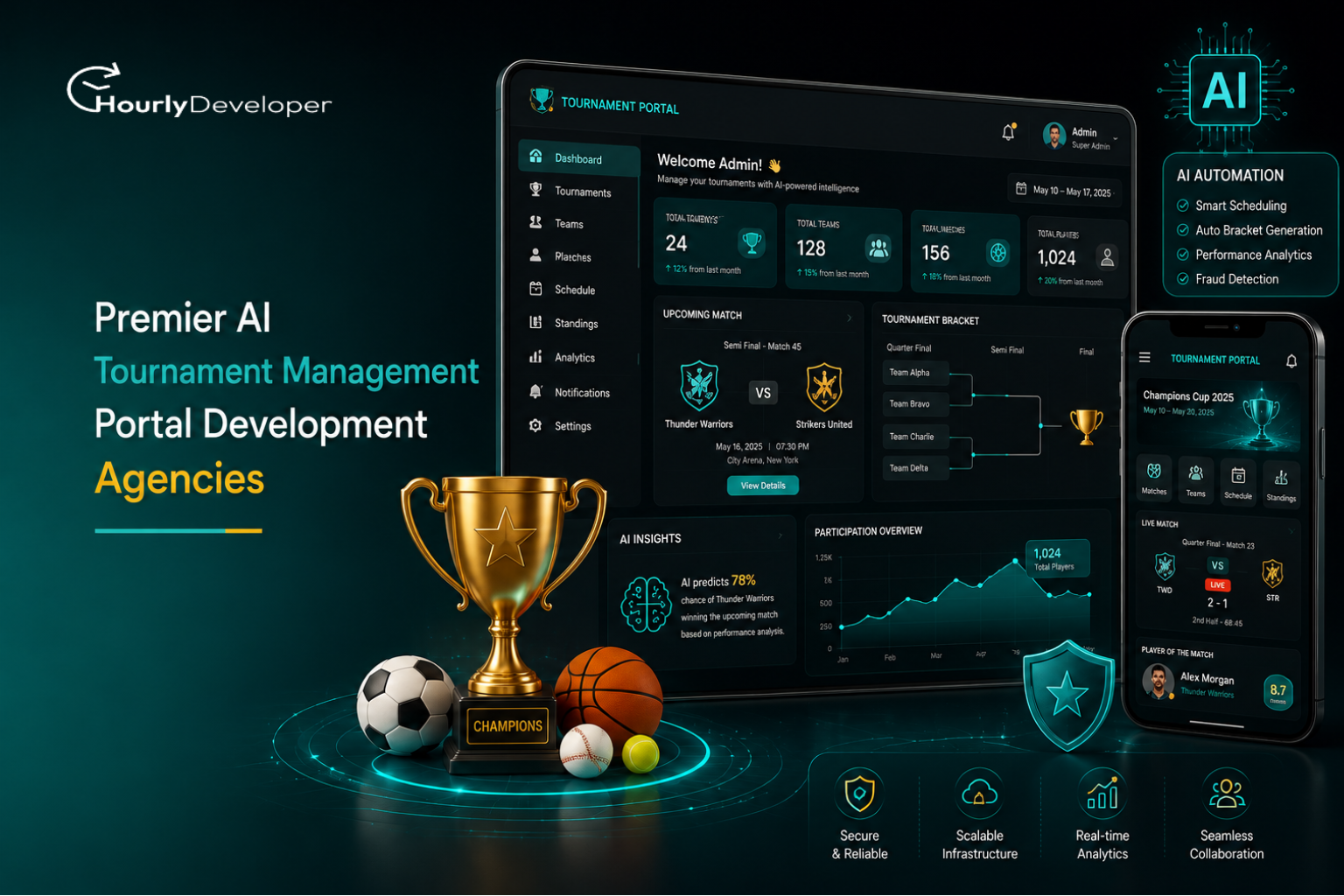
1.What Is an AI Tournament Management Portal?
Let us keep this simple. An AI Tournament Management Portal is a digital platform that handles everything a tournament needs, from registration to final results, using artificial intelligence to make smarter decisions along the way instead of just following a fixed set of rules.
How It Works
At its core, the portal collects data such as player rankings, past performance, availability, and venue details. It then uses that information to generate schedules, avoid clashes, predict likely outcomes, and flag issues before they turn into real problems. For instance, if two matches are about to overlap or a referee has been booked twice, the system catches it instantly instead of someone noticing it during the event itself, when it is already too late to fix quietly.
Most portals also include live scoring, automated bracket updates, payment processing for entry fees, and built-in communication tools, so everyone involved stays informed without constant back and forth emails or last-minute phone calls.
Key Users of the Platform
Organizers use the portal to plan fixtures, manage budgets, and monitor the entire event from a single dashboard instead of juggling five different tools at once.
Players rely on it to check schedules, track their standings, and receive match reminders directly on their phones rather than waiting for someone to post an update in a group chat.
Referees use it to confirm assignments, log scores, and resolve disputes with a clear digital record, instead of depending on memory or a paper scoresheet that can easily go missing.
Spectators get live updates, brackets, and streaming links, which keeps them genuinely engaged even when they are watching from home rather than sitting in the stands.
Because so many different people depend on the same system, the platform needs to be reliable in a way that leaves very little room for error. That is one reason organizations look for teams that focus specifically on this niche rather than treating it as just another generic app project.
2.Why Businesses Are Investing in AI Tournament Management Platforms
Tournaments used to run on good old fashioned hustle. Someone printed the brackets, someone else called every player to confirm timings, and everyone hoped nothing changed at the last minute. That approach worked fine when tournaments were small, but it falls apart quickly at scale. Here is why so many businesses are putting real money into these platforms right now.
Faster Tournament Scheduling
Instead of spending days building a schedule by hand, organizers can generate a full fixture list in minutes. The system adjusts automatically when a player withdraws or a venue suddenly becomes unavailable, saving hours of rework that used to eat into everyone’s week.
Reduced Manual Work
A large part of tournament management used to mean repetitive admin work, things like updating spreadsheets, sending reminder emails, and calculating standings by hand. Automating these tasks frees up staff to focus on decisions that actually need human judgment.
Better Participant Experience
Players and teams expect a smooth, professional experience these days. Clear schedules, instant updates, and easy communication make a tournament feel well organized, which matters a great deal when you are trying to attract repeat participants season after season.
AI-Assisted Decision-Making
From predicting seeding based on past performance to flagging scheduling conflicts before they even happen, AI gives organizers information they simply would not have caught on their own, no matter how experienced the team running the event happens to be.
Automated Match Operations
Live scoring, bracket progression, and result verification happen without anyone manually updating a board or spreadsheet, which cuts down on human error significantly and keeps every match moving on schedule.
Lower Costs Over Time
The upfront investment in a proper platform can feel significant, but most organizers find the math works out in their favor within a season or two. Fewer printed materials, fewer last-minute phone calls, and far less overtime spent fixing scheduling mistakes all add up to real savings once the system is running smoothly.
Higher Engagement and Retention
When spectators can follow live updates and players trust that the process is fair and well run, they keep coming back for the next season. That kind of loyalty is hard to build without the right technology behind it, which is exactly why more organizations are choosing to hire AI tournament software developers who already understand these requirements rather than starting from scratch with a generalist team.
3.20 Companies Worth Shortlisting in 2026
Finding the right partner among so many options is not easy, especially when every website claims to be the best in the business. To make this a little simpler, here are 20 companies that stand out among premier AI tournament management portal development agencies, based on their technical depth, industry experience, and the kind of results they consistently deliver for tournament organizers, leagues, and sports federations. Whether you are running a college esports league or a national championship, this list should help you shortlist genuine options instead of guessing.
1. HourlyDeveloper
HourlyDeveloper has built a strong reputation for combining flexible, hourly-based engagement with genuine tournament-tech expertise. Rather than locking clients into rigid packages, they let you scale a development team up or down depending on where you are in your project, whether that is an early prototype or a full-scale platform rollout. Their team has hands-on experience building scheduling engines, live scoring modules, and referee dashboards, which makes them a solid pick for organizations that want more control over cost without compromising on quality or long-term flexibility.
2. TournaSoft Technologies
TournaSoft Technologies has spent several years building custom platforms for regional sports leagues and college tournaments. They are known for a hands-on approach, often sitting in on planning calls with organizers to understand real operational pain points before writing a single line of code. Clients frequently mention their willingness to iterate on features after launch based on actual usage patterns rather than assumptions made during the planning stage.
3. Backend Development Company
As the name suggests, Backend Development Company focuses heavily on the engine room of tournament platforms, things like database architecture, API performance, and real-time data syncing. If your priority is a portal that can handle thousands of concurrent users during a live match without lagging, this is the kind of team worth having review your backend. They typically work alongside frontend or design partners rather than handling the full stack alone, so budgeting for a second vendor is worth keeping in mind.
4. Matchday Logic
Matchday Logic built its name around live scoring and real-time match operations. Their platforms are designed to handle sudden changes mid-match, such as injury substitutions or scoring disputes, without disrupting the overall bracket. Organizations running multiple simultaneous matches across several courts or venues tend to get the most value out of their approach to real-time synchronization.
5. HireFullStackDeveloperIndia
HireFullStackDeveloperIndia offers a cost-effective way to bring on full-stack talent that can handle both the visible interface and the backend logic of a tournament portal. Based in India, they are often chosen by startups and mid-sized companies looking for skilled developers at a more accessible price point, without sacrificing the ability to build complex features like automated bracket generation or live match tracking across multiple tournament formats.
6. BracketWorks Inc
BracketWorks Inc is particularly strong in bracket logic, covering single elimination, double elimination, round robin, and hybrid formats. If your tournament structure is a little unusual or mixes formats within the same event, this is a team that has likely solved a similar puzzle before, which can save weeks of back and forth during the planning phase.
7. HireAIDevelopers
HireAIDevelopers, as the name implies, specializes specifically in the artificial intelligence layer of these platforms. Their strength lies in building the prediction models, seeding algorithms, and anomaly detection systems that make a tournament portal feel genuinely smart rather than just automated. Businesses that already have a base platform but want to add smarter, AI-driven features often bring this team in for that exact purpose.
8. PlayOps Digital
PlayOps Digital positions itself as an end-to-end partner, covering everything from initial UX research to post-launch support. They are a good fit for organizations that want one team accountable for the entire portal rather than coordinating between multiple vendors and chasing updates across different time zones.
9. CourtSide AI Labs
CourtSide AI Labs leans into predictive analytics, using historical player and team data to help organizers with seeding, matchmaking, and performance forecasting. Sports federations that care deeply about fairness in seeding often gravitate toward this kind of specialized capability, since a poorly seeded bracket can undermine trust in an entire event.
10. LeagueForge Software
LeagueForge Software has built a name in the amateur and semi-professional league space, handling season-long tournaments rather than single events. Their platforms tend to include strong reporting tools for tracking standings across many months, which matters far more for a season-based league than it does for a weekend tournament.
11. ScoreStream Technologies
ScoreStream Technologies focuses on the spectator side of things, building live streaming integrations, real-time notifications, and social sharing features that keep audiences engaged well beyond the final whistle. Sponsors tend to appreciate their reporting dashboards, which break down exactly how audiences interacted with a live broadcast.
12. ChampionStack Solutions
ChampionStack Solutions is often chosen for larger, multi-venue tournaments because of their experience coordinating logistics across different locations within a single unified portal, including staff scheduling and venue-specific match assignments. Their in-house project managers usually stay involved through the entire event rather than handing off after launch.
13. ArenaByte Systems
ArenaByte Systems brings a strong background in esports specifically, having built portals that integrate directly with popular gaming platforms to pull match data automatically instead of requiring manual entry. This is especially useful for online qualifiers, where thousands of matches can happen in a single day.
14. GameFlow Development
GameFlow Development is known for clean, intuitive interfaces that make the platform easy to use even for organizers who are not particularly tech savvy, which matters a lot for smaller organizations without a dedicated IT staff on hand during the event. They also tend to offer shorter onboarding calls, which suits teams that want to go live quickly without a long training cycle.
15. PodiumTech Solutions
PodiumTech Solutions works across a wide range of sports, from traditional athletics to niche competitive gaming, and tends to offer more customizable pricing models depending on tournament size and duration. This flexibility appeals to organizations running events of very different scales throughout the year, from small regional meets to large invitational tournaments.
16. RivalEdge Software
RivalEdge Software has a reputation for strong post-tournament analytics, helping organizers understand participant behavior, drop-off points, and engagement trends that can inform how future events get planned. Many clients use their reports directly in sponsorship renewal conversations.
17. NextGen Sports Tech
NextGen Sports Tech has invested significantly in mobile-first design, recognizing that a large share of players and spectators interact with tournament portals primarily through their phones rather than a desktop browser. Their apps tend to load quickly even on slower mobile connections at crowded venues.
18. Ace Tournament Systems
Ace Tournament Systems is often recommended for organizations just starting to digitize their tournament operations, since they offer simpler onboarding processes and in-house training support for new users. Their support team is generally responsive during the first few live events, which helps smooth out early hiccups before organizers get fully comfortable running things on their own.
19. ProLeague Builders
ProLeague Builders specializes in building white-label tournament platforms that sports organizations can rebrand as their own, which appeals to federations wanting a proprietary feel without building everything from zero. This approach can shorten development timelines considerably compared to a fully custom build, which matters when an organizer is racing toward a fixed launch date.
20. FairPlay AI Solutions
FairPlay AI Solutions puts a strong emphasis on dispute resolution tools, using AI to flag inconsistent scoring or suspicious patterns that might indicate an error or unfair play, giving referees an extra layer of support during high-stakes matches where every decision gets scrutinized. Their audit trail feature is often highlighted by clients handling appeals after a contested result.
Taken together, these 20 names represent some of the best AI tournament management software development companies working today, each bringing a slightly different strength depending on your tournament format, scale, and budget. It is worth having short discovery calls with two or three of them before making a final decision, since the right fit often comes down to communication style just as much as technical skill.
4.How AI Improves the Tournament Experience for Every User
AI does not help just one group in a tournament. It touches almost everyone involved, though in slightly different ways depending on their role in the event.
Organizers
Organizers get the biggest relief, honestly. Instead of manually building schedules and constantly checking for conflicts, they get a system that does the heavy lifting and flags problems before they turn into headaches on event day.
Players
Players benefit from clear, real-time information about their matches, standings, and any last-minute changes, instead of refreshing a group chat and hoping someone remembers to post an update.
Coaches
Coaches get access to performance data and match history that helps them make smarter decisions about strategy, lineups, and pacing across a long tournament rather than relying purely on gut feeling.
Referees
Referees use AI-supported tools to log scores accurately, flag unusual patterns, and maintain a clear digital record of every decision, which reduces disputes and makes the whole process feel far more transparent to everyone watching.
Spectators
Spectators get live scores, instant bracket updates, and sometimes even predictive insights about how a match might unfold, which keeps them more invested even when they are not physically present at the venue.
Sponsors
Sponsors get better visibility into audience engagement metrics, letting them understand exactly how many people saw their branding and for how long, which makes it easier to justify continued investment in future events. When you put all of this together, it becomes clear why a well-built AI Tournament Management Portal ends up benefiting the entire ecosystem around a tournament rather than just the people running it.
5.Conclusion
There is no single right company on this list. The best fit depends on your tournament format, your budget, and how much you already have built versus what you need from scratch. A small regional league probably does not need the same platform as a national esports circuit running hundreds of matches at once.
What matters more than the brand name is whether the team you choose actually understands tournaments, not just software in general. That is the real difference between a generic app development shop and one of the premier AI tournament management portal development agencies covered here.
If there is one thing worth remembering before signing a contract, it is this. Ask to see how a platform handles a genuinely messy scenario, like a last-minute forfeit or a scoring dispute, rather than just a polished demo of a perfect bracket. That is where you actually see whether a team knows what they are doing.
It also helps to talk to a reference client who has already run at least one full event on the platform, not just a demo audience. A quick fifteen-minute call with someone who has lived through a real tournament day, forfeits, weather delays, and all, will usually tell you more than any sales pitch or feature checklist ever could.
2026 is shaping up to be a year where tournament organizers who invest in the right technology pull noticeably ahead of those still relying on spreadsheets and group chats. Whether you decide to build in-house or hire AI tournament software developers from one of the agencies above, the goal stays the same: run tournaments that feel effortless for everyone involved, even when a lot is happening behind the scenes.
 Back to Blog