1.Why 2026 Is the Right Time to Build One
Learners today are used to apps that already know what they want. A music app queues the next song before you finish the current one. A shopping app shows you the product before you search for it. Education has been slower to catch up, but that gap is closing fast, and it is closing because the underlying technology finally caught up with the idea.
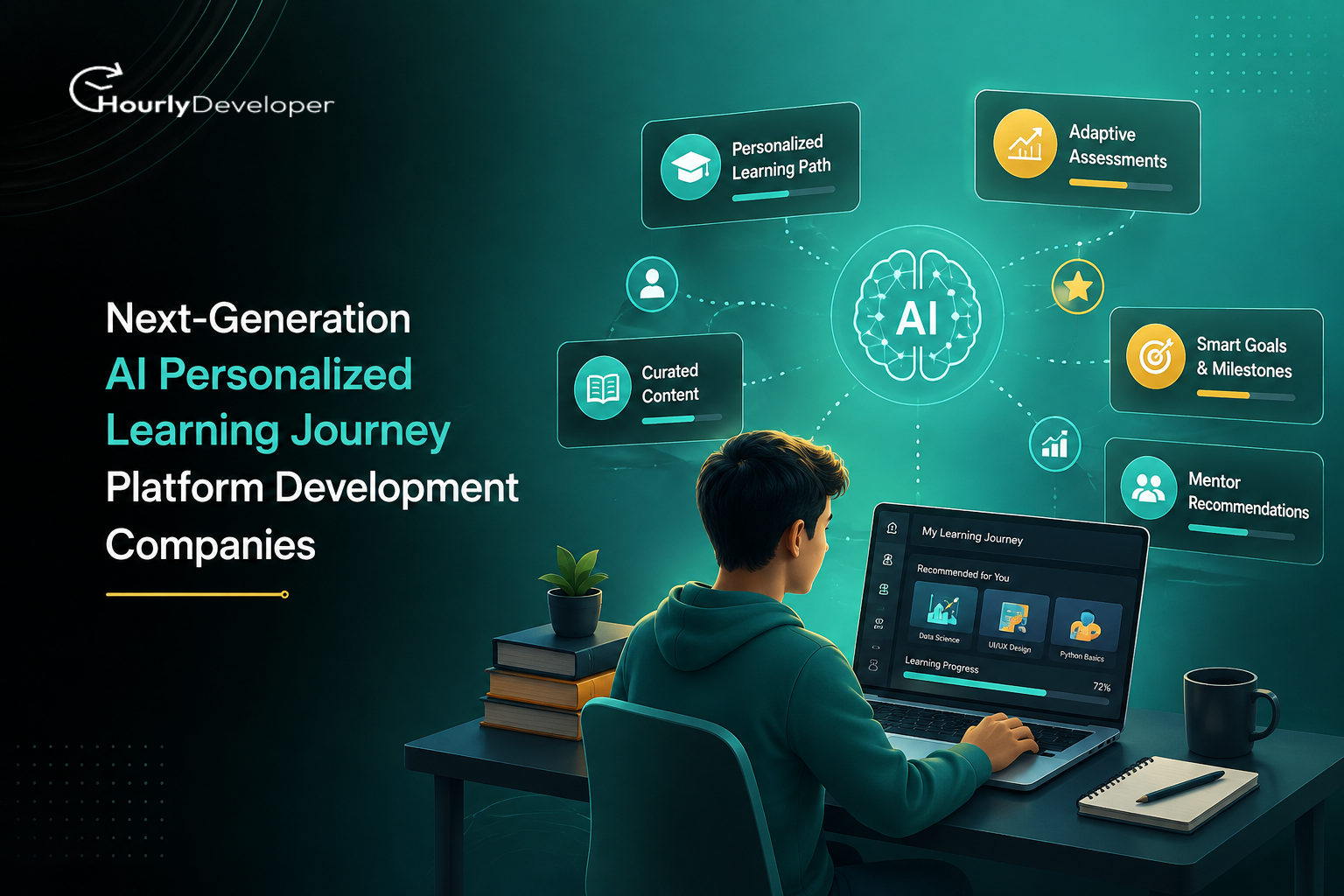
Companies that build an AI Personalized Learning Journey Platform today are not experimenting anymore. The tools for adaptive content, natural language tutoring, and predictive analytics are mature enough to ship in a real product, not just a pilot. That is exactly why the number of AI personalized learning journey platform development companies competing for this work has grown so quickly over the past two years, and why picking the right one now matters more than it did even a year ago.
2.What to Check Before You Hire a Development Partner
Most personalized learning platform development companies look similar on their homepage. The differences show up once you start asking real questions. Here is what actually matters:
- Have they built adaptive or AI-driven products before, not just standard web apps
- Do they understand data privacy rules relevant to learners, including minors if applicable
- Can they show you a technical architecture, not just a portfolio of screenshots
- Do they offer flexible hiring, whether hourly, dedicated team, or fixed project
- Is their communication clear enough that a non-technical founder can follow it
Keep these points in mind as you go through the list below. Some companies are better suited to fast-moving startups, while others are built for large institutions with strict compliance needs.
3.Red Flags Worth Watching For Before You Sign Anything
Not every vendor pitching itself as an AI specialist actually has the depth to back it up. A few warning signs tend to repeat across the industry, and catching them early can save months of rework later.
- Vague answers when you ask exactly which parts of the system are AI-driven versus rule-based
- No willingness to show a technical architecture diagram or explain how learner data will be stored and used
- Pressure to sign a long fixed-price contract before requirements are even clearly scoped out
- Portfolios full of screenshots but no working demo or case study you can actually test
- Reluctance to start with a small paid trial task before a larger engagement
If a vendor hesitates on more than one of these points, it is worth treating that as useful information rather than an inconvenience to push past.
4.12 AI Personalized Learning Journey Platform Development Companies Worth Shortlisting
Here is a practical rundown of companies actively working in this space. This list mixes established software teams with niche AI specialists, so you can compare based on what your project actually needs, not just brand recognition. Whether you are looking to build entirely from scratch or add AI capability to something that already exists, one of these twelve should fit somewhere on your shortlist.
HourlyDeveloper sits at the top of this list for a simple reason. It solves the biggest headache founders have with development, which is rigid, expensive contracts. Instead of locking you into a fixed scope, Hourly Developers lets you hire developers, including AI and ed-tech specialists, on an hourly basis. This works well when your AI Personalized Learning Journey Platform idea is still evolving and you need a team that can scale up or down without renegotiating a contract every time. Their developers work across AI integration, backend systems, and frontend design, which makes them a flexible first stop for founders who are not ready to commit to a large agency yet. Because billing is hourly, you also get a clearer view of where the budget is actually going, week by week, instead of waiting for a milestone invoice to find out. For early-stage founders still validating their product, that kind of visibility often matters as much as the code itself.
- NeoAlpha EdTech Solutions
NeoAlpha EdTech Solutions focuses specifically on adaptive learning engines, the kind of AI system that decides what a learner sees next based on their behavior. They typically work with mid-size ed-tech companies that already have a product but want to add real personalization instead of static course paths. Their strength lies in machine learning models trained on learner engagement data, which is exactly the kind of expertise you want if your platform depends on getting recommendations right. Teams considering them are usually past the idea stage and already sitting on real usage data, since that data is what their models rely on to start making useful predictions.
- Backend Development Company
As the name suggests, this backend development company specializes in the infrastructure that most learning platforms take for granted until it breaks. Personalization sounds simple from the outside, but it requires serious backend architecture to process learner data, run recommendation models, and keep everything fast even as user numbers grow. If your platform is already live and struggling with speed or scalability, this is the kind of team you bring in to rebuild the engine without stopping the car. They also tend to be a good fit for platforms preparing for a large enrollment spike, such as a new academic year, since backend stability under load is their main area of focus.
Learnify AI Labs is built around one thing, learning analytics. They help companies turn raw learner data into actual decisions, like which lessons to show next or when a learner is likely to drop off. Their teams often work alongside in-house product managers rather than replacing them, which suits founders who want a collaborative partner instead of a black-box vendor. They are also known for building lightweight dashboards that non-technical stakeholders can actually read, which matters if your leadership team wants visibility without needing an engineer to interpret it for them.
- HireFullStackDeveloperIndia
HireFullStackDeveloperIndia is a solid pick for founders who want one team handling everything, frontend, backend, and AI integration, instead of juggling multiple vendors. As the name implies, their developer pool is based in India, which often means access to experienced full stack engineers at a lower cost than hiring locally in the US or UK. They are commonly chosen by startups building their AI Personalized Learning Journey Platform from scratch and wanting a single accountable team from day one. Time zone overlap can be a consideration depending on where your core team is based, so it is worth confirming daily overlap hours before signing on.
- Brainwave Cognitive Systems
Brainwave Cognitive Systems takes a slightly different approach by grounding their AI models in cognitive science research, meaning how people actually learn and retain information, rather than pure engagement metrics. This makes them a strong fit for K-12 platforms or higher-education tools where actual learning outcomes matter more than time spent in the app. Founders working with an academic advisory board or curriculum team often find this approach easier to defend internally, since the AI logic is grounded in research rather than pure engagement optimization.
If your project needs deep AI expertise specifically, not general software development, HireAIDevelopers is worth a look. They focus on connecting companies with engineers who specialize in machine learning, natural language processing, and recommendation systems. This makes them a good option when you already have a development team but need to hire AI education software developers for a specific, technical piece of the puzzle, like building the recommendation engine itself. Many founders bring them in for a fixed engagement, get the AI component working, and then hand it off to their own team for ongoing maintenance, which keeps costs predictable.
EdTechCraft Studio leans heavily into design and user experience, working on the assumption that even the smartest AI system fails if learners find the interface confusing. They are a good fit for platforms where learner retention is the main challenge, since their teams specialize in making adaptive content feel intuitive rather than overwhelming. Their process usually starts with learner interviews before any design work begins, which slows the timeline slightly but tends to reduce costly redesigns later.
PixelMinds Learning Tech focuses on gamified, interactive learning experiences, think progress bars, achievement badges, and interactive quizzes that adjust difficulty automatically. They are commonly chosen by consumer-facing learning apps aimed at younger audiences or casual learners who need extra motivation to stay engaged. If your biggest metric is daily active users rather than test scores, their approach to motivation-driven design tends to move that number faster than a purely academic build would.
Skillverse Digital works primarily with corporate training and upskilling platforms, building tools that map an employee’s existing skills against where they need to be. Their AI models are geared toward career-path recommendations rather than academic content, which makes them a strong match for B2B learning products. HR and L&D teams tend to like working with them because the outputs translate easily into performance review conversations, not just internal engagement metrics.
CodeNova EdTech specializes in integration work, connecting new AI features into existing learning management systems instead of building everything from zero. This is useful for larger organizations that already have an LMS in place but want to bolt on adaptive learning features without a full rebuild. Because they work primarily through APIs, projects with them tend to move faster than a ground-up build, provided your existing system is documented well enough to integrate against.
Quantum Learning Systems focuses on predictive analytics at scale, the kind of work universities and large institutions need when they are tracking thousands of students at once. Their systems are built to flag at-risk learners early and adjust learning paths before a student falls too far behind, which is a very different problem than building a consumer app for a few thousand users. Institutions with compliance requirements around student data also tend to gravitate toward them, since large-scale data governance is built into how they design a system from the start.
6.How These Companies Actually Differ From Each Other
Scroll through enough vendor websites and everyone starts to sound the same. Every company claims to offer AI, personalization, and scalability. The real differences only show up once you look at what each team actually specializes in, day to day.
- Some AI personalized learning journey platform development companies focus almost entirely on the AI layer itself, meaning the models and recommendation logic, and expect you to bring your own design and backend team
- Others, like backend-focused teams, care more about infrastructure that can handle growth than about the AI models running on top of it
- A few specialize in a single learner type, such as corporate training, K-12, or higher education, and their tools reflect that focus
- Hiring models differ too, from hourly arrangements to dedicated teams to fixed-scope projects, and this affects both cost and how much control you retain
None of these differences make one company objectively better than another. They simply mean the fit depends on what stage your AI Personalized Learning Journey Platform is at right now, and what problem you are actually trying to solve first. This is also why so many directories that rank the best AI personalized learning platform development companies by a single star rating miss the point entirely. Fit matters more than rank.
7.What It Actually Costs to Hire the Right Team
Cost is usually the first question on every founder’s mind, and understandably so. Pricing across personalized learning platform development companies varies a lot depending on scope, team location, and how much of the AI layer is custom-built versus using existing frameworks.
- Hourly hiring, useful for early-stage or evolving scopes, typically runs lower upfront but requires active project management on your side
- Dedicated teams cost more monthly but reduce coordination overhead, since the same people stay on your project long term
- Fixed-price projects offer budget certainty but work best only when requirements are already well defined
Whichever model you choose, it helps to get a written breakdown of what is included, especially around AI model training, data pipeline work, and post-launch support, before you commit to any vendor. It is also worth asking directly who owns the trained models and the underlying code once the engagement ends, since some agencies quietly retain rights to reusable AI components unless the contract states otherwise. A five-minute conversation about this upfront can prevent a much longer, more expensive conversation a year down the line.
8.Building In-House Versus Hiring Externally
Some founders wonder whether they should just hire a small in-house team instead of going through any of the personalized learning platform development companies listed here. It is a fair question, and the honest answer depends on how central AI personalization is to your core product.
- If personalization is your entire product, not a feature, an in-house team eventually makes sense once you have enough revenue to support it
- If personalization is one feature among many, an external team almost always gets you there faster and cheaper
- A hybrid approach, where you hire externally first and slowly bring capability in-house, is common among founders who plan to scale significantly
There is no universally correct answer here, only what fits your runway, your timeline, and how much of this technology you plan to own long term.
9.So, Which of These Are the "Best"?
Truthfully, there is no single answer, and any blog claiming otherwise is probably trying to sell you something. The best AI personalized learning platform development companies are not the same for every founder. A seed-stage startup needing flexible hourly help is better served by a team like Hourly Developers, while a university handling thousands of students needs the kind of predictive analytics that Quantum Learning Systems offers.
The smarter move is matching the company to your actual stage and problem, not chasing whichever name shows up first in a search result. If your shortlist still feels too long after reading through the comparison table, it usually helps to rank your top three priorities first, whether that is budget, speed, or depth of AI expertise, and let that ranking narrow the list for you rather than starting from the price tag alone. This is also the point where it makes sense to directly hire AI education software developers for a short paid trial task, since watching how a team handles a small, real problem tells you more than any portfolio page ever will.
10.One Last Thing Before You Pick a Vendor
Here is a question worth sitting with before you sign anything. If your platform could only get one thing right, adaptive content, learner engagement, backend speed, or predictive insight, which one would actually move the needle for your users?
Most founders never ask that question out loud. They compare pricing sheets and portfolios instead. But the companies on this list are not interchangeable, and the right one for you depends entirely on the answer to that question. So before you send out another proposal request, figure out what your platform truly needs to get right first. The rest of the decision tends to fall into place after that.
 Back to Blog