1.What Exactly Is an AI Product Customization System?
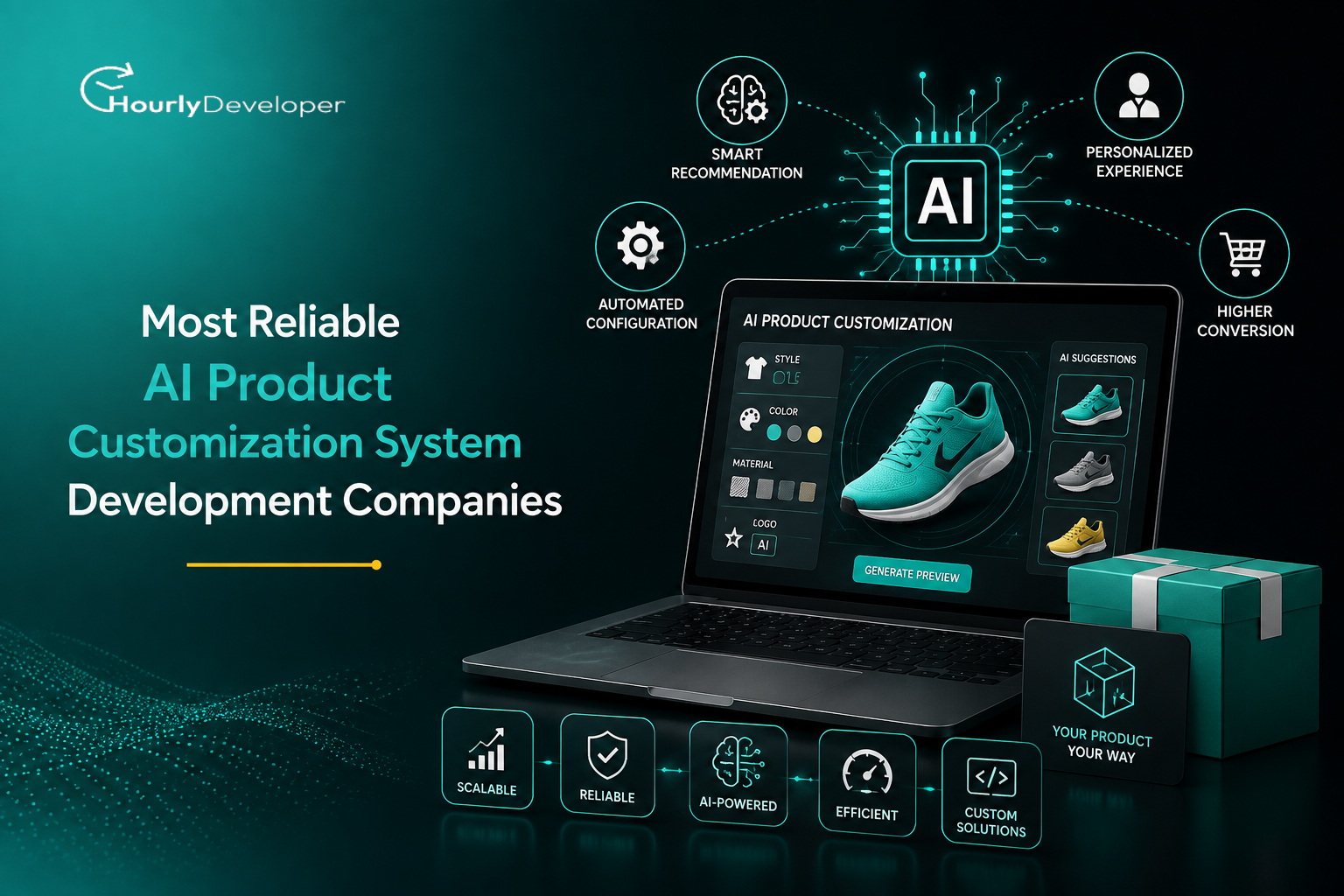
An AI Product Customization System is software that lets customers personalize a product, and lets the AI handle the heavy lifting behind that personalization. Instead of a static product page, shoppers get a live configurator. They choose materials, colors, dimensions, or add-ons, and the system instantly shows pricing, availability, and sometimes even a visual preview of the finished product.
Behind the scenes, machine learning models predict what combinations customers are likely to want, flag configurations that are not manufacturable, and recommend upsells based on past behavior. Some systems go a step further with generative AI, producing custom design previews from a simple text or image prompt, which is quickly becoming a differentiator in categories like furniture, footwear, and apparel.
This is very different from a basic product configurator you might have seen a decade ago. Those older tools were rule-based and fairly rigid. Today’s AI-powered product configurator platform development work involves recommendation engines, computer vision, natural language processing, and real-time 3D rendering, all working together so the customer feels like the product was made just for them, not picked from a limited drop-down menu.
2.What to Look For Before You Hire
Before you scroll through the list, it helps to know what actually separates the best AI product customization software development companies from the rest of the market.
First, look at their portfolio and ask if they have shipped configurators for products similar to yours, whether that is furniture, apparel, electronics, or industrial equipment. Second, check whether they build on your existing tech stack, such as Shopify, Magento, or a custom platform, or whether they try to push you into theirs. Third, ask how they handle the AI layer specifically. Do they have data scientists on staff, or do they just plug in a generic API and call it AI?
Pricing models matter too. Some companies bill hourly, some fix the price per module, and some offer dedicated teams on a monthly retainer. None of these is automatically better, it really depends on how clearly you can define your requirements upfront and how much flexibility you expect to need as the project evolves.
Finally, when you hire AI product customization developers, ask about post-launch support. A configurator is not a one-time build. It needs updates as your catalog grows, as new product lines launch, and as customer behavior data comes in and reshapes what the recommendation engine should be suggesting.
Now, here is the list of companies worth putting on your shortlist.
1. HourlyDeveloper
HourlyDeveloper is a great starting point if you want flexibility without locking into a large fixed-price contract before you are even sure of your full scope. Their model is built around transparent, pay-as-you-go hourly billing, which works well when your customization requirements are still evolving or when you want to test an MVP configurator before committing to a bigger build. They put together small, dedicated teams for AI Product Customization System projects, covering everything from the configurator’s user interface to the backend logic that calculates pricing and availability in real time. Because of their hourly structure, they are especially popular with early-stage startups and small ecommerce brands that need to move fast without overcommitting budget upfront, and their teams typically communicate directly with founders rather than routing everything through account managers, which keeps decision-making quick. Founders who have worked with them often mention that the hourly model makes it easier to add or drop features mid-project without renegotiating a contract, which matters a lot when customer feedback shapes the configurator after the first version is live.
2. Accenture
Accenture is one of the largest technology consulting firms in the world, and its digital engineering division regularly handles large-scale AI and personalization projects for global retail, automotive, and manufacturing clients. If your company needs an enterprise-grade rollout with strong governance, data security, and integration across multiple regions or business units, Accenture has the scale and prior experience to support it. They typically bring in cross-functional teams covering strategy, design, and engineering rather than a single small squad, which suits businesses that need a partner capable of managing complexity across departments. The trade-off is that engagement size and cost usually suit mid-size to large enterprises rather than early-stage startups, and project timelines tend to be longer given the amount of coordination involved across teams. Many clients also value that Accenture pairs its engineering delivery with change management support, helping internal teams adopt the new configurator smoothly across sales, customer service, and marketing departments rather than treating the launch as a purely technical event.
3. HireFullStackDeveloperIndia
As the name suggests, this company focuses specifically on full stack development talent, and that matters a great deal for product customization work since a configurator needs strong frontend interactivity paired with solid backend logic and database design. They offer both dedicated developer hiring, where you get engineers who slot into your existing team, and full project delivery, where they manage the entire build from planning to launch. This flexibility is useful depending on whether you already have an in-house product manager overseeing the roadmap or need the vendor to run the whole project independently from start to finish. Being based in India, they are also a common choice for companies looking for cost-effective full stack teams without compromising on communication or turnaround time. Their pricing tends to be more approachable than the large global consultancies on this list, which makes them a practical choice for founders who want experienced engineers without the overhead that usually comes with bigger firms.
4. Tata Consultancy Services (TCS)
Tata Consultancy Services is a familiar name for enterprise IT buyers, and its consulting arm has decades of experience building large-scale digital commerce and personalization platforms across industries including automotive, retail, and industrial manufacturing. Their strength lies in handling complex, multi-year digital transformation programs where the customization system needs to connect with existing ERP, supply chain, and inventory systems rather than operate as a standalone tool. This makes them a strong fit for large manufacturers or retailers building an AI Product Customization System that has to work alongside legacy infrastructure already in place. As with most large consulting firms, expect a formal engagement process, dedicated account management, and pricing structured around long-term contracts rather than short, quick builds. Because of their scale, they are also well positioned to support customization rollouts across multiple countries and languages at once, something smaller agencies often struggle to coordinate.
5. HireAIDevelopers
This company is built specifically around sourcing and deploying AI development talent, which is useful if you already have a product team in place and just need specialized engineers to build the recommendation engine, visual preview tool, or configuration logic behind your system. They are a solid option for businesses that want to hire AI product customization developers on a project basis without going through a lengthy vendor onboarding process or committing to a large agency retainer. Their model tends to work best for companies that already have clear technical requirements and just need extra engineering capacity, rather than businesses that need help figuring out the product strategy from scratch, so it helps to walk in with a fairly defined brief. They are also a sensible pick for companies that already tried an in-house AI hire and found it difficult to source the right specialist skill set on their own.
6. Infosys
Infosys has a long track record in enterprise digital engineering, and its innovation labs have worked on AI-driven personalization and configurator-style solutions for retail and industrial clients around the world. They tend to be a good match for businesses that already run on Infosys-built systems or want a single vendor capable of handling both the AI layer and the surrounding enterprise software stack. Their scale means they can support very large catalogs and complex configuration rules, though smaller businesses may find their processes and onboarding a bit heavier than working with a boutique agency that moves faster on smaller engagements. They also tend to invest heavily in reusable frameworks, which can shorten development time on your second or third product line once the first configurator is live.
7. Cognizant
Cognizant’s digital business practice covers AI-based personalization work, and their teams have experience connecting configurator front ends to backend manufacturing and inventory systems that many other agencies are not equipped to touch. They are often chosen by businesses in the automotive and industrial equipment sectors that need customization tools tied closely to real-world production constraints, since a configuration that looks good on screen but cannot actually be manufactured creates problems downstream for operations teams. Their pricing and engagement models tend to mirror other large consulting firms, with structured contracts rather than quick, informal project starts. Clients in these sectors often mention that Cognizant’s teams ask detailed manufacturing questions early on, which helps avoid costly redesigns later in the project.
8. Backend Development Company
This company specializes in the backend architecture that most customization systems actually depend on for speed and reliability, an area that gets overlooked when businesses focus too heavily on how the configurator looks on the surface. A slow configurator that takes several seconds to update pricing or check availability will frustrate customers no matter how polished the frontend design is, so having a partner that focuses specifically on backend performance is valuable when your product catalog is large or your pricing logic involves multiple interacting variables. They are a good fit for businesses that already have a design or frontend team in place and specifically need someone to strengthen the engine running behind the scenes, including database structure, caching, and API performance. They are frequently brought in as a specialist partner alongside a separate design agency, splitting the work so each vendor focuses on what they do best.
9. Capgemini
Capgemini has a strong presence in Europe and works across manufacturing, automotive, and consumer goods, industries where product customization has been part of the business model for years, even before AI became part of the conversation. Their teams bring experience connecting configurators to CAD systems and manufacturing execution systems, which is useful if your customization needs go beyond ecommerce into actual production planning and factory floor logic. This makes them a strong choice for industrial businesses rather than pure ecommerce brands, and their engagement style tends to favor structured, milestone-based project management over rapid, informal iteration. Their European base also makes them a natural fit for businesses that need to meet regional data protection requirements as part of the build.
10. IBM Consulting
IBM’s consulting arm brings deep experience in AI model development, and their configurator projects often lean on IBM’s own AI and data platforms rather than third-party tools. This is a reasonable choice if your business already uses IBM infrastructure or specifically wants a vendor with in-house AI research behind the recommendation engine powering your configurator. Their pricing and timelines tend to reflect enterprise-scale engagements, so smaller businesses may find better value with a more specialized boutique firm instead, particularly if your immediate need is a lean, fast-launching configurator rather than a research-heavy AI build spanning several quarters. They also offer strong documentation and knowledge transfer at the end of an engagement, which matters if you plan to bring maintenance in-house eventually.
11. EPAM Systems
EPAM is known for strong engineering talent and has delivered custom software for retail, healthcare, and fintech clients across multiple continents. Their product engineering teams are comfortable building the kind of AI-powered product configurator platform development work that blends 3D visualization with backend logic, which suits businesses selling visually complex products like furniture, apparel, or home decor where customers need to see exactly what they are ordering before checkout. Their global delivery model allows for a mix of onshore and offshore teams, which can help balance cost and communication depending on your budget and time zone requirements for daily collaboration. Clients also point to their strong QA processes, which matter a lot for configurators since a single pricing bug can affect every order placed that day.
12. Globant
Globant has built a reputation for combining creative digital experiences with solid engineering, and that combination matters for customization tools where the visual experience is just as important as the underlying logic driving pricing and inventory. They have worked with consumer brands on personalization projects in the past and tend to bring a strong design sensibility to the configurator’s interface, which can be a meaningful differentiator if your product category is highly visual or fashion-driven. Their teams often include dedicated UX researchers alongside engineers, which is less common among purely technical development shops focused only on code. This makes them a popular choice among consumer brands that see the configurator as part of their overall brand experience rather than just a technical feature.
13. ScienceSoft
ScienceSoft focuses specifically on custom software development including AI and machine learning projects, and they have published case studies around configurator and personalization tools built for mid-size manufacturing and retail businesses. Their size makes them more accessible for mid-market companies compared to the much larger consulting firms on this list, both in terms of pricing flexibility and how closely their team works with your internal stakeholders throughout the build. They tend to be a practical middle ground between boutique agencies and massive global consultancies for founders who want more attention without paying enterprise rates. They are also known for being upfront about project timelines and cost estimates early in the sales process, which many founders appreciate when comparing multiple vendors.
14. Netguru
Netguru is a European software house known for product engineering and AI integration work, often serving growth-stage companies rather than massive enterprises. They tend to work closely with founders on product strategy alongside development, which can be useful if you are still refining exactly what your customization system needs to do beyond the basic requirements you started with. Their teams are generally comfortable working in agile sprints with frequent check-ins, which suits founders who want visibility into progress rather than a long black-box development phase before the first demo appears. This makes them a good option for founders who want a genuine thought partner rather than a vendor who simply executes a spec handed to them.
15. Intellias
Intellias has strong experience in automotive and industrial software, sectors where configuration and customization logic has existed for decades in areas like vehicle spec building and equipment ordering systems. Their teams understand the technical constraints of manufacturable configurations, which is valuable if your product has real-world production limits that the AI recommendations need to respect rather than suggesting combinations that sound good on screen but cannot actually be built on the factory floor. This makes them particularly suited to industrial and automotive clients over purely digital-first ecommerce brands. Their background also means they are comfortable working alongside existing engineering teams inside large manufacturers rather than replacing them entirely.
3.Final Thoughts
Picking a development partner for something as important as your product’s customization experience is not a decision to rush. The right team does not just write code, they understand your customers, your catalog, and the operational limits behind what you can actually manufacture or deliver on time.
Whether you lean toward a large global name like Accenture or TCS for enterprise scale, or a leaner, faster-moving team like Hourly Developers or HireAIDevelopers for a startup budget, what matters most is matching the vendor to your actual stage and needs. The most reliable AI product customization system development companies are rarely the ones with the flashiest website. They are the ones who ask the right questions before writing a single line of code.
If you are still comparing the best AI product customization software development companies on this list, start with two or three that match your budget and industry, ask for a short discovery call, and see how well they understand your product before committing to anything long term. That conversation alone usually tells you more than any portfolio page ever could.
And if you already know you are ready to move forward, the smartest next step is simple. Shortlist your top picks, get on a call, and hire AI product customization developers who can show you real examples of work close to what you are trying to build for your own customers.
 Back to Blog