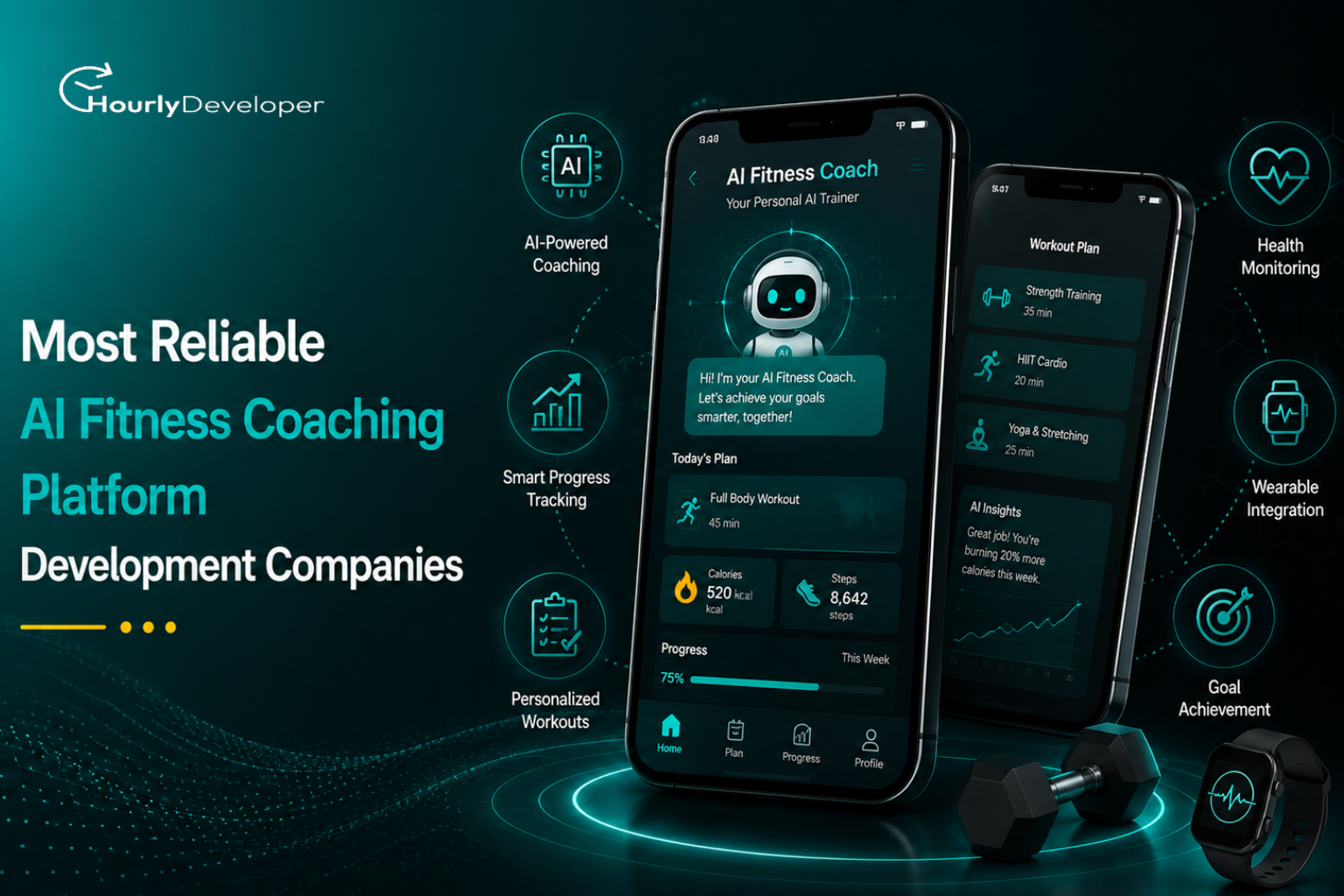
Most Reliable AI Fitness Coaching Platform Development Companies
Introduction
Most Reliable AI Fitness Coaching Platform Development Companies
1.What Actually Matters When Choosing a Development Partner
Before jumping into the list, it helps to know what separates a company that can genuinely deliver an AI Fitness Coaching Platform from one that will simply bolt a chatbot onto a workout calendar. Look at their track record with machine learning models specifically trained on movement or health data, not just generic AI add ons. Ask how they handle data privacy, since fitness apps deal with sensitive health information and regulations vary depending on where your users are based.
Also pay attention to how a company approaches integration work. A coaching platform is only as useful as the wearables and health kits it connects to, whether that is Apple Health, Google Fit, Whoop, or Garmin. Companies that have already solved these integration headaches for other clients will save you months of trial and error, and that experience is usually visible in their portfolio if you know what to look for.
Finally, think about how the company plans for growth beyond launch day. Coaching models get better the more data they collect, which means your development partner should have a plan for retraining models, monitoring accuracy, and adjusting recommendations as your user base scales from a few hundred people to tens of thousands. A vendor that only thinks about the first release is not the same as one that is planning alongside you for year two and year three.
It also helps to ask each company how they measure success once an app is live. Some teams stop paying attention the day after launch, while others set up dashboards that track retention, workout completion rates, and how often users actually follow the AI generated recommendations. That second kind of partner tends to catch problems early, long before a founder notices users quietly drifting away.
2.The 20 Most Reliable AI Fitness Coaching Platform Development Companies
Here is the full list, presented in an easy to scan format so you can quickly compare each company before diving deeper into the ones that interest you most.
This company has built a strong reputation for handling the unglamorous but critical backend work that powers fitness platforms, including workout recommendation engines, real time data pipelines, and scalable APIs that hold up under heavy wearable traffic. Founders working with tight timelines often mention how quickly their engineers ramp up on unfamiliar codebases, which matters a lot when a project has already been through one failed development attempt elsewhere.
• Deep experience with real time data syncing from wearables and IoT fitness devices
• Strong focus on scalable cloud architecture using AWS and Azure
• Works with startups and mid sized fitness brands looking for long term technical partnerships
• Offers dedicated DevOps support to keep uptime steady as user numbers grow
Known for assembling dedicated full stack teams quickly, this company is a common choice for founders who need both the mobile front end and the AI driven backend built by one accountable team rather than juggling multiple vendors. Their project managers tend to stay involved for the full length of the engagement, which reduces the miscommunication that often happens when different teams handle different parts of a coaching app.
• Flexible hiring models including dedicated developer and full project ownership options
• Hands on experience with React Native and Flutter for cross platform fitness apps
• Competitive pricing that appeals to early stage founders watching their budget
• Provides weekly progress reports so founders always know where the build stands
As the name suggests, this company leans specifically into artificial intelligence work, making it a natural fit for fitness platforms that depend on computer vision for form correction and predictive models for injury prevention. They spend real time in the discovery phase understanding what kind of training data is available before recommending a technical approach, which prevents founders from overpaying for a model that the data simply cannot support.
• Specialized team for computer vision based exercise form analysis
• Experience building adaptive coaching algorithms that adjust to user progress
• Track record of integrating AI models with existing fitness app codebases
• Comfortable explaining technical tradeoffs in plain language during planning calls
Softermii has worked on a number of health and wellness platforms and brings solid experience in video streaming technology, which matters a great deal for apps offering live coaching sessions alongside AI generated plans. Clients frequently point to their structured discovery workshops as a reason projects stay on schedule, since scope tends to be locked in clearly before any code gets written.
• Strong background in video and audio streaming infrastructure
• Experience with telehealth adjacent products that require strict compliance
• Known for transparent project management and clear client communication
• Offers dedicated quality assurance cycles before every release
This company brings a data first mindset to fitness technology, which shows in how they structure the analytics layer behind coaching apps, turning raw sensor data into insights users can actually act on. Their engineers often work closely with in house data scientists on the client side, which makes them a solid fit for founders who already have some data expertise but need help scaling the infrastructure around it.
• Strong data engineering and analytics capability for large user bases
• Experience building custom dashboards for trainers and gym operators
• Works across both mobile apps and web based coaching portals
• Familiar with setting up data pipelines that support future AI model training
Yalantis has a long history in on demand and marketplace apps, and that background translates well into fitness platforms that need to connect users with human trainers alongside their AI coaching features. Their design team spends considerable time mapping out user journeys before development starts, and clients often mention that the final product feels intuitive even to users who are not particularly tech savvy.
• Extensive portfolio in on demand service apps adaptable to fitness marketplaces
• Strong UX research practice before development begins
• Comfortable working with both startups and established enterprise clients
• Offers dedicated business analysts to help refine product requirements early
WebClues Infotech is often chosen by fitness startups because of how quickly they can move from concept to a working prototype, which matters when founders are trying to validate an idea before a full investment round. Their in house design team works alongside developers from day one, which tends to shorten the usual back and forth between design revisions and technical feasibility checks.
• Rapid prototyping process suited to early stage fitness startups
• In house design team that handles both UI and user experience work
• Offers ongoing maintenance packages after the initial app launch
• Known for realistic timelines that rarely slip once a contract is signed
With one of the longer track records on this list, Belitsoft has built health tech products for over a decade and brings a methodical, documentation heavy approach that larger clients tend to appreciate. Their teams are accustomed to working under strict compliance requirements, which is useful for coaching platforms that plan to expand into markets with stricter health data regulations.
• Long standing experience in healthcare adjacent software development
• Strong compliance knowledge including HIPAA and GDPR requirements
• Suited to enterprise clients that need thorough documentation and audits
• Maintains dedicated compliance officers who review sensitive data handling
Intellectsoft has built a name in enterprise digital transformation projects, and their fitness technology work often reflects that scale, focusing on platforms designed to serve millions of users across multiple regions. They tend to bring in specialized architects early in a project to plan for the kind of traffic spikes that come with viral growth or seasonal fitness challenges.
• Enterprise grade project management and delivery processes
• Experience integrating IoT devices at scale for fitness and wellness clients
• Global delivery centers that support round the clock development cycles
• Strong track record supporting clients through multiple funding rounds
As one of the older names in custom software development, Iflexion offers a level of institutional experience that appeals to fitness brands looking for a partner they can rely on for multi year platform growth. Their longevity means they have already seen how earlier waves of fitness technology succeeded or failed, and that perspective often shapes more realistic project planning.
• Decades of experience across healthcare, wellness, and consumer apps
• Strong quality assurance and testing practices for complex applications
• Flexible engagement models from fixed price to dedicated teams
• Maintains long term support contracts with several repeat clients
Konstant Infosolutions has a broad mobile app development portfolio, and their fitness sector work tends to focus on gamification features that keep users engaged with their coaching plans over the long term. They have built streak systems, reward mechanics, and social challenges into several client apps, which founders often ask about specifically once they see how much it improves retention.
• Strong focus on gamification and user retention features
• Experience with wearable integration for both iOS and Android
• Cost effective packages aimed at small and mid sized businesses
• Offers modular pricing so founders can add features in phases
Space O Technologies has delivered a wide range of on demand and fitness apps, and clients often mention their willingness to walk founders through technical decisions in plain language rather than jargon. That approach tends to work well for first time founders who need a partner willing to explain why one architecture choice might cost more but save money over the following two years.
• Clear, founder friendly communication throughout the project lifecycle
• Experience with subscription and membership based app models
• Offers post launch analytics support to track user engagement
• Provides fixed price options for founders who prefer predictable budgeting
Hyperlink InfoSystem has shipped a large volume of mobile apps across industries, and their fitness division has grown steadily as demand for coaching platforms with social features has increased. Their scale allows them to staff up quickly on larger projects, which can be an advantage for founders working against a hard launch deadline tied to a marketing campaign or investor demo.
• High volume of completed mobile app projects across categories
• Growing specialization in social and community features for fitness apps
• Multiple regional offices supporting different time zones
• Able to scale team size up or down as project needs shift
Appinventiv is one of the larger players on this list, and their scale allows them to take on ambitious fitness platform builds that combine AI coaching, e commerce for supplements, and community features all in one product. Their internal research division regularly publishes findings on fitness technology trends, which often shapes how they advise clients on feature prioritization.
• Large in house AI and machine learning research division
• Experience combining fitness coaching with e commerce and marketplace features
• Strong client roster spanning startups to well funded enterprises
• Offers dedicated innovation workshops before formal project kickoff
Miquido has a design forward reputation in the European market, and their fitness app work tends to stand out visually while still holding up on the technical side with solid AI model integration. Their design and engineering teams work in tight loops rather than passing work down a chain, which tends to produce apps that feel cohesive rather than assembled from separate pieces.
• Award recognized design and user experience work
• Experience building personalized recommendation engines
• Strong presence across the European Union market
• Runs regular usability testing sessions throughout development
Netguru brings a product first approach to development, often helping fitness founders refine their idea before writing a single line of code, which reduces costly pivots once the AI Fitness Coaching Platform is already in progress. Their data science team is large enough to support ongoing model improvements well after the initial launch, which many smaller studios simply cannot offer.
• Strong discovery phase practices before full development begins
• Experience across both consumer fitness apps and enterprise wellness platforms
• Established data science team for building predictive coaching models
• Offers structured workshops to align stakeholders before development starts
WillowTree has worked with several recognizable consumer brands, and their fitness sector clients benefit from a strong marketing and analytics background that goes beyond just writing code. Founders who already have brand recognition but need a more sophisticated app often find their combination of technical depth and consumer marketing experience particularly useful.
• Strong background working with established consumer facing brands
• In house data and analytics team for user behavior insights
• Full service offering including branding and go to market support
• Experienced at handling large scale user bases from day one
Fueled built its reputation on premium mobile app design, and fitness brands often choose them when the visual experience of the coaching app is just as important as the underlying AI features. Their smaller team size means founders typically work directly with senior designers and engineers rather than being routed through several layers of account management.
• Premium design studio approach with a polished visual identity
• History of working with well funded startups and venture backed brands
• Smaller, senior heavy teams for higher touch client relationships
• Known for strong storytelling within app onboarding experiences
ArcTouch has a track record in voice and conversational interfaces, which is increasingly relevant for fitness coaching apps that let users interact with their AI trainer through voice commands during a workout. Their experience working with major media brands has also given them practice building apps that hold up under sudden spikes in traffic and attention.
• Notable experience with voice interface and conversational AI design
• Cross platform mobile development for iOS, Android, and wearables
• Track record with media and entertainment brands entering fitness
• Comfortable managing projects that require rapid scaling after launch
MindSea is a smaller, specialized studio that has carved out a niche specifically in health and fitness apps, making them a strong option for founders who want a team that lives and breathes this category rather than treating it as one project among many. Their smaller size means founders often deal directly with the same two or three team members throughout the entire engagement.
• Health and fitness app specialization rather than general purpose development
• Close, hands on collaboration suited to early stage founders
• Experience with subscription pricing models common in coaching apps
• Offers ongoing advisory support even after the core team wraps up
3.Final Thoughts
Picking the right partner for your AI Fitness Coaching Platform is not about finding the company with the flashiest portfolio. It is about matching your specific needs, whether that is deep machine learning expertise, fast prototyping, or enterprise grade compliance, with a team that has actually solved similar problems before. The 20 companies listed here each bring something different to the table, and the right fit depends on your budget, your timeline, and how much hand holding you want during the build.
It is also worth remembering that this decision does not have to feel permanent. Plenty of founders start with a smaller, more specialized studio to get an early version into the hands of real users, then move to a larger partner once the product proves it has traction and needs more infrastructure behind it. What matters most in the early stages is finding a team that asks good questions rather than one that simply agrees with every idea you bring to the table.
As 2026 continues, the gap between fitness apps that genuinely coach users and those that just track numbers is only going to widen. Founders who invest in the right development partner now are setting themselves up to compete in a market where users expect their app to understand them, not just log what they did yesterday. Take your time shortlisting, ask hard questions about past projects, and choose a team that treats your platform as a long term product rather than a one off build.
Choosing the right AI fitness coaching platform development company can significantly impact the success of your digital fitness product. The companies featured in this guide offer expertise in AI-powered coaching, personalized workout recommendations, wearable integrations, and scalable mobile app development. Compare their capabilities, experience, and engagement models to find the partner that best fits your goals. Contact us to discuss your AI fitness app idea and learn how our experienced development team can help you build a secure, intelligent, and high-performance fitness coaching platform.
Nainesh Pandya, our astute Director, navigates our team toward unprecedented success. With a fervent dedication to innovation and a sharp business acumen, Nainesh propels our company forward with resolute determination. His strategic foresight and compassionate guidance motivate us to scale new heights collaboratively.
Frequently Asked Questions
A functional first version usually takes between 4 and 7 months, depending on how many AI features you include at launch. Simple coaching apps with basic recommendation logic can move faster, while platforms with computer vision based form correction or deep wearable integration often need closer to 6 to 9 months for a stable, well tested release.
Costs generally fall between $45,000 and $180,000 for a solid minimum viable product, though enterprise grade platforms with advanced machine learning models and multiple wearable integrations can exceed $250,000. Ongoing maintenance, model retraining, cloud hosting, and third party API fees should also be budgeted separately once the initial launch is complete and users start joining.
Specialists tend to move faster because they already understand common pitfalls in this category, such as handling inconsistent sensor data from different wearable brands. General firms can still deliver strong results if they have relevant case studies, but always ask specifically about past health or fitness projects before signing any contract.
It is one of the most overlooked risks founders take on. Health related data often falls under regulations like HIPAA in the United States or GDPR in Europe, and non compliance can lead to significant fines. Confirm early in discussions whether your chosen partner has direct, verifiable experience meeting these specific legal requirements.
Most of the companies listed offer ongoing support packages that cover bug fixes, performance monitoring, and periodic retraining of AI models as user data grows. It is worth negotiating these terms during the initial contract rather than treating post launch support as an afterthought once the app is already live and running.
Find exceptional developers at Hourlydeveloper. Get the expertise, solutions, and teamwork you need for success. Hire developers easily and boost your projects today!
 Back to Blog