1.Why Nonprofits Are Moving to AI-Powered Donation Software in 2026
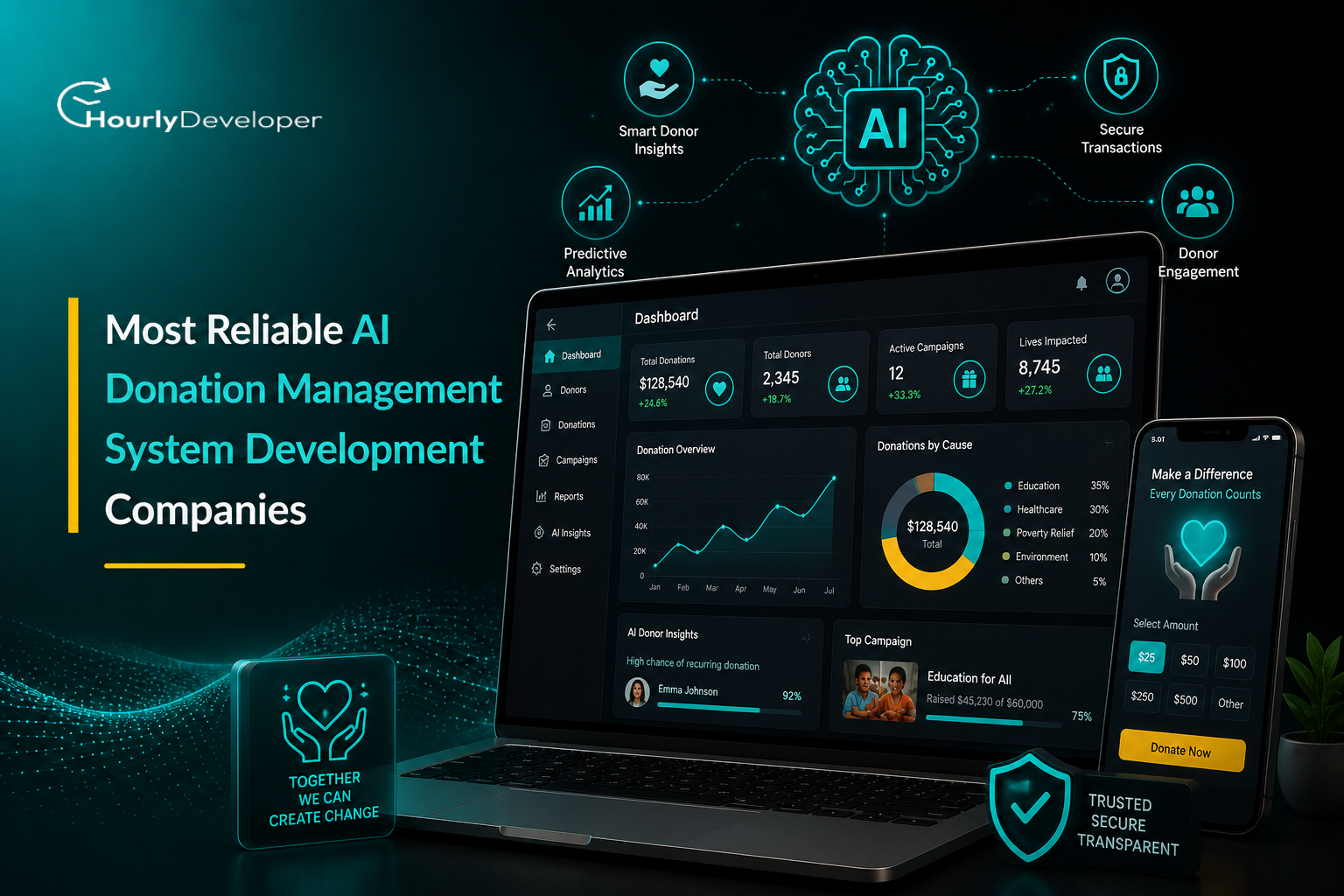
The old donation management tools were basically digital filing cabinets. They stored donor names, tracked payments, and sent out receipts. That is it. Today’s AI-powered donation management software does a lot more. It studies donor giving patterns and tells you who is likely to lapse before they actually stop giving. It personalizes email and SMS outreach based on what each donor actually cares about. It automates recurring donation reminders, flags fraudulent transactions, and even predicts the best time to launch a year end campaign based on historical data.
For a growing nonprofit, this is not a luxury anymore. It is the difference between a fundraising team that is constantly reacting to donor drop off and one that sees it coming weeks in advance. That is the real value behind investing in donation management system development that is built around AI from day one rather than bolted on as an afterthought.
There is also a quieter benefit that does not get talked about enough. Staff burnout in the nonprofit sector is real, and a lot of it comes from manually chasing donor data across spreadsheets, email threads, and outdated dashboards. Good AI-powered donation management software takes that repetitive load off a small team’s plate so they can spend their time on the actual relationships, the phone calls, the thank you notes, the things that keep donors coming back year after year. That shift alone is often reason enough for a nonprofit to finally make the switch in 2026.
2.What to Look For Before You Hire a Development Partner
Before you jump into hiring, it helps to know what actually separates a strong development company from an average one. Look for teams that have worked with nonprofits before, since donor psychology and compliance requirements like PCI DSS and GDPR are very different from a typical ecommerce build. Ask about their AI and machine learning depth, not just their app development portfolio, because plenty of agencies use the word AI loosely without having engineers who can actually build or fine tune a model.
It also helps to ask how a company approaches data privacy, since donor information is sensitive and any breach can damage years of community trust in a matter of days. Pricing structure matters too. Some companies charge a fixed project fee, while others work on a monthly retainer or hourly basis, and the right model really depends on how much your requirements might change during the build. And always check if they offer ongoing support after launch, because donation platforms need constant tuning as donor behavior shifts, payment gateways update their APIs, and new fundraising channels like text to give keep emerging. With that context in mind, here are the companies worth shortlisting this year.
1. HourlyDeveloper
HourlyDeveloper has built a solid reputation among startups and nonprofits looking for flexible, budget friendly engagement models. What makes them stand out is the ability to hire developers on an hourly, part time, or full time basis depending on project size, which works well for organizations that are not ready to commit to a massive upfront budget. Their team works across Python, JavaScript, and mobile stacks, and they have experience building custom platforms from the ground up rather than relying on templated solutions. For nonprofits that want a donation management system development partner who can scale the engagement as the project grows, HourlyDeveloper is a practical starting point. They are known for quick onboarding, usually getting a dedicated team in place within a short turnaround, and for being transparent about costs from the first conversation. This kind of flexibility is especially useful for nonprofits piloting an AI-powered donation management software feature before committing to a full platform rebuild.
2. WebClues Infotech
WebClues Infotech is a CMMI Level 5 certified company headquartered in India, with additional offices in the USA and UAE. Founded in 2014, they have grown into a full service technology partner with a strong focus on artificial intelligence woven into every stage of development, from strategy to deployment. Their team of over two hundred professionals covers AI, machine learning, data engineering, and mobile and web development, which makes them a strong fit for nonprofits that want an AI donation management system built with real predictive capability rather than surface level automation. They have delivered close to a thousand projects across healthcare, finance, and e-commerce, and their AI first approach means donor segmentation, churn prediction, and personalized outreach can be built directly into the platform rather than added later. Clients also mention their communication and responsiveness as a strength, which matters a great deal on longer nonprofit engagements where requirements tend to evolve as the organization’s fundraising strategy shifts.
3. DataEximIT
Based in Ahmedabad, DataEximIT has been around since 2018 and has built a name for itself in web and mobile application development. They work across a wide range of technologies including PHP, React Native, Node.js, and WordPress, and have completed well over a thousand projects for clients across different industries. What nonprofits tend to like about DataEximIT is their end to end approach. They do not just build the platform, they also support UI and UX design, digital marketing, and long term maintenance, which matters a lot for organizations that do not have a large internal tech team to manage things post launch. Their pricing is generally on the more affordable end, which makes them a reasonable option for grassroots nonprofits that are just starting to digitize their fundraising operations.
4. Backend Development Company
As the name suggests, this team specializes specifically in backend engineering, which is often the hardest part of any donation platform to get right. Payment processing, recurring billing logic, fraud detection, and data security all live in the backend, and a weak foundation here can cause real problems down the line. This company focuses on building resilient, scalable server side architecture, which pairs well with a separate frontend or mobile team if you already have one, or they can bring in full stack support depending on your project scope. For nonprofits that already have a design partner but need rock solid backend infrastructure for their donation system, this is a strong option to explore. Their engineers tend to be well versed in building secure payment pipelines that can handle sudden traffic spikes, which is exactly the kind of scenario a nonprofit faces during a viral giving campaign or a year end fundraising push.
5. HireFullStackDeveloperIndia
Operating since the early 2000s, HireFullStackDeveloperIndia offers access to a large pool of over two hundred developers who can be brought on hourly, part time, or full time. Their specialty lies in full stack development using MEAN, MERN, and LAMP stacks, which gives nonprofits flexibility in choosing the right technology for their platform. Clients particularly value the level of control and visibility they get over the team, along with transparent communication throughout the project. If your organization wants a donation management system development partner where you retain a lot of oversight without managing an in house team, this company is worth a conversation. Their pricing tends to be competitive compared to Western agencies offering similar full stack capabilities, which matters for nonprofits trying to stretch limited technology budgets as far as possible.
6. HireAIDevelopers
This one is exactly what it sounds like, a team built specifically around AI development. They work with businesses looking to integrate generative AI, machine learning models, and conversational AI chatbots into their platforms. For a nonprofit wanting to hire AI donation software developers who live and breathe artificial intelligence rather than treating it as a side skill, this company brings that specialization to the table. Their portfolio spans AI powered web and mobile applications across multiple industries, and they position themselves as a partner that goes beyond basic development into building genuinely intelligent systems. For nonprofits specifically, that could mean an AI chatbot that answers donor questions instantly, or a recommendation engine that suggests the right giving tier based on someone’s past behavior.
7. Konstant Infosolutions
Konstant Infosolutions has been in the custom software space for over two decades, which gives them a depth of experience that newer agencies simply cannot match yet. They have worked on enterprise grade platforms across fintech, healthcare, and nonprofit sectors, with strong capabilities in cloud infrastructure and API integrations. Their long track record makes them a safer bet for larger nonprofits or foundations that need a platform capable of handling high transaction volumes and complex reporting requirements. They also tend to offer detailed post launch service level agreements, which gives clients a clear picture of response times and support scope before the project even begins, something smaller agencies do not always formalize as well.
8. Space-O Technologies
Space-O Technologies is known for its mobile first approach, which matters a lot considering how many donors now give through their phones rather than a desktop browser. They have built apps across categories including fintech and on demand services, and bring that same mobile expertise into donation platform development. Their process typically includes dedicated project managers and regular progress updates, which nonprofits often appreciate since it removes a lot of the guesswork during a multi month build. They also offer post launch app store optimization support, which is a small but genuinely helpful detail for nonprofits trying to get their giving app discovered organically.
9. Appinventiv
Appinventiv has built a strong global presence, working with both startups and large enterprises on AI integrated mobile and web solutions. Their team includes data scientists and machine learning engineers alongside traditional developers, which means they can go deeper into predictive analytics and donor behavior modeling than a typical general purpose agency. For nonprofits with bigger budgets who want a platform that genuinely competes with commercial fundraising software, Appinventiv is worth including in your shortlist. They have also published detailed case studies on donor retention modeling, which gives prospective clients a realistic sense of what kind of AI outcomes are actually achievable rather than just promised.
10. Matellio
Matellio focuses heavily on custom software and AI consulting, often starting engagements with a discovery phase to map out exactly what a nonprofit needs before writing a single line of code. This upfront planning tends to reduce costly changes later in the project. They have experience across industries including nonprofit and social impact, and their consulting first approach appeals to organizations that are not entirely sure yet what their AI donation management system should look like and want expert guidance before committing to a build. This can save real money down the line, since a lot of costly rebuilds happen simply because a nonprofit did not fully map out its requirements before development started.
11. Rlogical Techsoft
Rlogical Techsoft is a mid sized development company that has carved out a niche working with startups and small to mid sized organizations, including several in the nonprofit and social sector. They are known for being cost conscious without cutting corners on quality, and their team covers web development, mobile apps, and increasingly, AI integrations like chatbots and recommendation engines. For smaller nonprofits watching their budget closely, Rlogical offers a good balance of affordability and technical competence. They are also known for relatively short discovery cycles, meaning a project can move from an initial call to an actual development sprint faster than with some of the larger, more process heavy agencies on this list.
12. TatvaSoft
TatvaSoft has been operating for close to two decades and has built a reputation around enterprise software development with strong project management discipline. They follow structured development methodologies and are known for detailed documentation throughout a project, which nonprofits with compliance obligations tend to find reassuring. Their technology stack covers .NET, Java, and modern JavaScript frameworks, giving them flexibility depending on what a nonprofit’s existing systems already run on. Nonprofits migrating away from a legacy donor database often find TatvaSoft’s structured discovery process useful for mapping out exactly what data needs to move, and what can safely be left behind.
13. Biz4Group
Biz4Group has built a name specifically in AI and blockchain development, and has increasingly worked on projects involving predictive analytics and intelligent automation. Their team includes AI researchers alongside developers, which is somewhat rare among agencies of their size. Nonprofits looking for a platform that leans heavily on machine learning models for donor scoring or campaign optimization often find Biz4Group’s specialization a good match for that specific need. They generally start engagements with a technical feasibility assessment, which helps set realistic expectations about what AI can and cannot reliably predict from a nonprofit’s existing donor data.
14. Debut Infotech
Debut Infotech works across AI, blockchain, and enterprise software development, with a client base spanning startups to established organizations. They have a reputation for being responsive during the discovery and planning stages, which helps set realistic expectations early on. Their AI capabilities include predictive modeling and natural language processing, both of which are genuinely useful for a modern donation platform that wants to understand donor intent rather than just record transactions. They also tend to offer flexible team structures, ranging from a single dedicated developer for smaller projects to a full cross functional pod for larger nonprofit platforms.
15. Chetu
Chetu is one of the larger names on this list, operating with thousands of developers across multiple global offices. Their scale means they can staff up quickly for larger, more complex donation platform builds, and they have experience across a very wide range of industries including nonprofit and financial services. For organizations that need a partner capable of handling a large, multi phase project with dedicated teams across different specializations, Chetu’s size and infrastructure make them a practical option to consider. Their scale also means they can typically accommodate tight deadlines by adding developers to a project when needed, something smaller boutique agencies usually cannot offer.
 Back to Blog