1.Why Node.js Still Matters in 2026
Before we get into numbers, it helps to understand why Node.js development continues to dominate backend conversations in 2026. Node.js runs JavaScript on the server, which means a single codebase language can power your entire stack. For founders, that translates into smaller teams, faster onboarding, and fewer communication gaps between frontend and backend developers.
Node.js is also known for handling concurrent connections efficiently, which is why it is the backbone of chat applications, streaming platforms, booking systems, and dashboards that need to update in real time. Frameworks like Express.js make this even more practical. Express.js development has become the default starting point for most Node.js projects because it keeps the codebase lightweight while still supporting complex routing, middleware, and API structures.
By 2026, most Node.js development services providers build on top of Express.js or similar frameworks like Fastify and NestJS, depending on how much structure the project needs. The choice of framework does affect cost slightly, since NestJS projects often take longer to set up but are easier to maintain at scale, while Express.js development tends to be faster to launch and cheaper upfront.
None of this changes the fact that Node.js is still one of the more cost effective choices for backend development, especially for startups that need to move fast without locking themselves into a rigid, expensive stack from day one.
2026 has also brought a few new cost factors into the picture. More Node.js projects now include some form of AI feature, whether that is a chatbot, a recommendation engine, or automated content generation, and connecting these features to third party AI APIs adds both setup time and usage based fees. Serverless deployment through platforms like AWS Lambda has also become more common for Node.js backends, which can lower infrastructure cost for apps with unpredictable traffic but requires a developer who understands how to architect around it properly. Neither of these trends changes the fundamentals of budgeting, but both are worth raising directly with any provider you are evaluating.
2.Node.js Cost for a Web App vs a Mobile App Backend
Founders building a mobile app often assume the backend cost will mirror a comparable web app, but there are a few differences worth planning for.
A Node.js backend serving a mobile app usually needs a more rigorous API versioning strategy, since you cannot force every user to update their app the moment you change an endpoint. This adds a small amount of ongoing development discipline that a web only backend does not require in the same way.
Push notifications, offline data syncing, and background job processing tend to be more central to mobile products, and each of these adds development hours that are easy to underestimate in an initial quote. A backend built only for a website typically skips all three.
On the other hand, a single Node.js backend can usually serve both a web app and a mobile app at the same time, which means you are not paying to build two separate backend systems. This shared backend approach is one of the more practical reasons founders choose Node.js when they know a mobile app is on the roadmap, even if the first launch is web only.
3.What Actually Determines Node.js App Development Cost
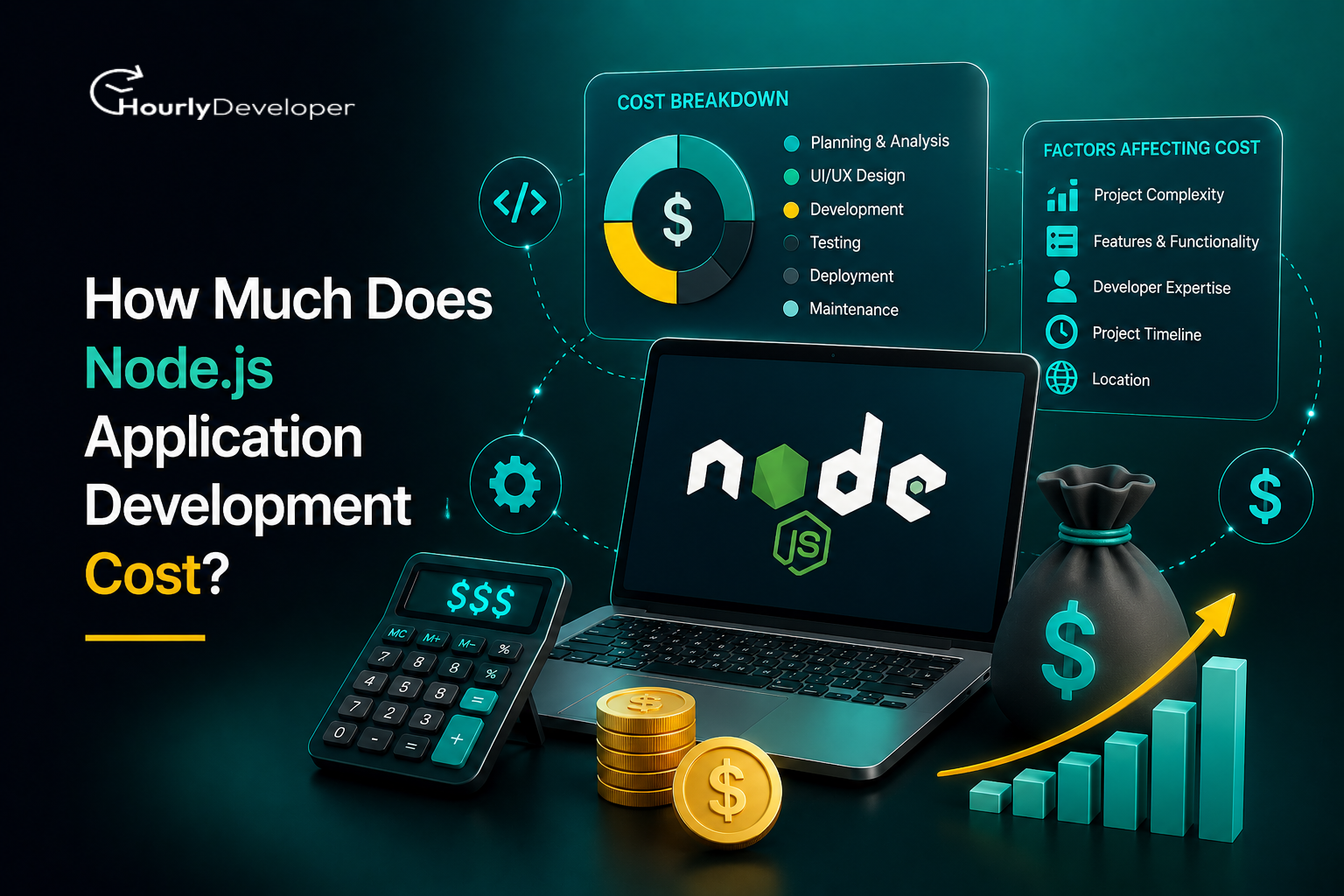
Every Node.js app development cost estimate depends on a handful of variables that rarely get explained clearly. Understanding them will help you read any quote you receive with more confidence.
- App complexity and feature count. A basic MVP with a handful of screens and one core workflow costs far less than a platform with real time messaging, payment processing, and multiple user roles. Complexity is the single biggest driver of cost, more than any other factor on this list.
- Team composition. Are you hiring a solo developer, a small team of three, or a full agency with a project manager, QA, and DevOps support included? A backend development company with a structured team usually costs more per hour, but it also reduces the risk of delays, bugs, and rework later.
- Hiring model. Whether you hire NodeJS developers as freelancers, through a staffing agency, or as part of a dedicated development team changes your hourly rate and your level of oversight responsibility.
- Geography. Developers in North America and Western Europe charge significantly more per hour than developers in South Asia or Eastern Europe. This does not automatically mean lower quality. It reflects cost of living and market rates in each region.
- Third party integrations. Payment gateways, cloud storage, SMS or email services, and AI APIs all add setup time and sometimes recurring subscription costs that are separate from your development budget.
- Testing and QA scope. A team that only does manual spot checks before launch will quote lower than one that builds automated test suites and runs load testing before every release. The second option costs more upfront but usually saves money in post launch fixes.
- Compliance requirements. Applications in healthcare, finance, or any space that touches personal data often need additional architecture work to meet standards like HIPAA, PCI DSS, or GDPR. This adds both development time and ongoing audit cost that unregulated apps simply do not carry.
- Maintenance and support. Many founders forget to budget for post launch maintenance, security patches, and server monitoring, which typically adds 15 to 20 percent of the original build cost every year.
- Timeline pressure. Rushed timelines mean more developers working in parallel, which usually increases the total cost even if the calendar time shrinks.
Once you understand these variables, it becomes much easier to compare quotes from different providers. Two proposals with wildly different price tags might reflect two very different assumptions about scope, not one company trying to overcharge you.
4.Node.js App Development Cost by Project Size
Simple or MVP Applications: $8,000 to $25,000. A simple Node.js application, think a basic booking tool, an internal admin panel, or a single feature MVP, usually takes 4 to 8 weeks to build with a small team. This range covers a functional backend, a simple database structure, basic authentication, and a handful of API endpoints. This is often the starting point for founders trying to validate an idea before committing to a larger budget.
Mid size Applications: $25,000 to $80,000. This tier covers most SaaS products, marketplace platforms, and apps with multiple user roles, payment integration, and moderate real time features like notifications or live status updates. Expect a build timeline of 3 to 6 months with a team of 3 to 5 people, including a backend developer, frontend developer, and a QA resource.
Enterprise grade or Complex Applications: $80,000 to $250,000 and up. Applications in this category include high traffic platforms, apps with heavy real time components like live streaming or chat at scale, multi region deployments, and strict compliance requirements such as HIPAA or SOC 2. Node.js application development cost in 2026 for enterprise projects also factors in dedicated DevOps support, load testing, and ongoing security audits, which smaller projects can usually skip.
It is worth noting that these figures represent development cost alone. They do not include hosting, third party API subscriptions, app store fees for connected mobile apps, or long term maintenance, all of which we will cover further down.
If you are trying to answer how much does Node.js application development cost for your specific idea, the honest answer is that you need a scoped estimate based on your actual feature list, not a generic industry number. However, the ranges above give you a realistic starting point for budgeting conversations with any Node.js development company you are evaluating.
5.A Realistic Cost Breakdown for a Mid-Size Node.js Project
Numbers feel more useful when you can see how they actually add up. Take a mid size marketplace app with user accounts, payments, search, and a review system. Here is roughly how a $50,000 budget might be allocated across a typical project.
- Backend development (Node.js and Express.js). Around $22,000, covering API design, database structure, authentication, and payment integration.
- Frontend development. Around $14,000, covering the customer facing web app and any admin dashboard.
- QA and testing. Around $5,000, covering manual testing, automated test scripts, and bug fixing rounds.
- Project management. Around $4,000, covering sprint planning, client communication, and progress reporting.
- DevOps and deployment setup. Around $3,000, covering server configuration, CI or CD pipelines, and initial monitoring tools.
- Contingency buffer. Around $2,000, set aside for scope adjustments discovered mid project.
Your own breakdown will shift depending on which features matter most to your product, but seeing the allocation laid out this way makes it much easier to question a vendor quote that looks unusually low in one category and unusually high in another.
6.Node.js Cost Compared to Other Backend Technologies
Founders often ask how Node.js pricing stacks up against other backend options, since the technology choice itself can shift the final number.
Python with Django or FastAPI tends to land in a similar hourly range to Node.js, though Python projects sometimes take slightly longer for high concurrency, real time features since Node.js handles those natively.
Java with Spring Boot usually costs more per hour, largely because senior Java developers command higher salaries and enterprise Java projects tend to include heavier architecture from the start.
PHP with Laravel is often the cheapest option on paper, but it can require more optimization work for applications with heavy real time requirements, which sometimes narrows the gap once total project hours are counted.
Ruby on Rails pricing sits close to Node.js as well, though the Rails developer talent pool has shrunk in recent years, which can push rates up in certain regions.
None of this means Node.js is automatically the cheapest or the best choice for every product. It simply tends to offer a strong balance of hiring availability, development speed, and long term maintenance cost, which is why it remains a popular default for founders comparing options in 2026.
7.Cost by Hiring Model
Freelance Node.js Developers. Hiring freelance developers is usually the cheapest route on paper, with hourly rates ranging from $15 to $45 depending on experience and location. This works well for small, well defined tasks, but founders who hire NodeJS developers as freelancers often end up managing the project themselves, which adds hidden time cost even if the invoice looks smaller.
In House Node.js Developers. Building an in-house team gives you full control and long term continuity, but it comes with salary, benefits, recruitment cost, and management overhead. In the United States, a mid level Node.js developer salary typically falls between $85,000 and $130,000 per year, not counting benefits or recruitment fees.
Node.js Development Company or Agency. Working with an established Node.js development company usually means a structured process, a project manager, QA support, and accountability built into the contract. Hourly rates for agency based Node.js development services typically range from $25 to $75 per hour depending on region and team seniority, and the total project cost reflects the ranges discussed in the previous section.
Offshore Dedicated Teams. Many founders choose to hire NodeJS developers through offshore or nearshore development companies, particularly in South Asia and Eastern Europe, to get senior level talent at a lower hourly rate without sacrificing structure or communication quality. This model has become one of the more practical ways to access full Node.js development services without the overhead of building an in-house team from scratch.
Each hiring model comes with tradeoffs beyond just the hourly number. A cheaper rate that requires more of your own project management time is not necessarily cheaper once your own hours are factored in.
8.Average Hourly Rates by Region in 2026
Hourly rates for Node.js backend development vary widely depending on where the team is based. Here is a general picture for 2026.
- North America. $80 to $150 per hour
- Western Europe. $60 to $120 per hour
- Eastern Europe. $35 to $70 per hour
- South Asia, including India. $18 to $45 per hour
- Southeast Asia. $20 to $40 per hour
These figures are for professional teams with verifiable project history, not individual freelancers picked at random. It is also worth noting that a lower hourly rate does not always mean a lower total project cost, since a less experienced team working at a lower rate may take considerably longer to complete the same Node.js backend development work as a senior team charging more per hour. When comparing quotes across regions, ask each provider for an estimated total hours alongside their hourly rate. That single number tells you far more about the real cost than the rate alone.
9.Hidden Costs Most Companies Do Not Mention
Most Node.js app development cost estimates you receive will only cover the build phase. Here are the costs that tend to surface later, often after the contract is signed.
- Cloud hosting and infrastructure. Depending on traffic, hosting on AWS, GCP, or Azure can range from $50 a month for a small app to several thousand dollars a month for a high traffic platform with multiple servers, databases, and caching layers.
- Third party API subscriptions. Payment processors, SMS gateways, email delivery services, and AI APIs often charge based on usage. These costs scale with your user base, which means they can grow faster than your original budget anticipated.
- Security audits and compliance. If your application handles sensitive data, a one time security audit can cost anywhere from $3,000 to $15,000, and industries like healthcare or finance may require ongoing compliance reviews.
- Post launch bug fixes. Even well tested applications surface bugs once real users start interacting with them. Budgeting a buffer of 10 to 15 percent of your original development cost for the first three months after launch is a realistic practice.
- Scaling costs. An application built for 1,000 users behaves very differently at 100,000 users. Database optimization, load balancing, and caching strategies often require additional development work that was not part of the original scope.
- Developer turnover. If you are working with a small freelance team and a key developer leaves mid project, onboarding a replacement takes time and often introduces additional cost that nobody plans for at the start.
Asking your Node.js development company directly about these categories before signing a contract is one of the most effective ways to avoid budget surprises six months into the project.
10.How to Choose the Right Node.js Development Company
Not every provider offering Node.js development services is the right fit for every project. A few practical checks can save you from a costly mismatch.
Look at their portfolio for projects similar in scale to yours, not just similar in industry. A team that has built simple websites will approach a real time trading platform very differently than a team that specializes in high concurrency systems.
Ask how they structure their Node.js backend development process, specifically around testing, code review, and documentation. Companies that skip these steps to move faster often cost you more later in bug fixes and onboarding new developers.
Request a breakdown of their team structure for your specific project. Whether you work with a large backend development company or a smaller specialized team, a single generalist developer working alone carries more risk than a small team with a dedicated backend developer, a QA resource, and a project lead, even if the single developer’s rate looks cheaper.
Finally, ask about their communication process. Time zone overlap, reporting cadence, and how quickly they respond to blockers matter just as much as their hourly rate, especially if you are working with an offshore or nearshore Node.js development company.
A few red flags are worth watching for regardless of price. Be cautious of any provider unwilling to put a detailed scope of work in writing, one that cannot explain their testing process in specific terms, or one that quotes a number far below every other proposal you received without a clear reason. In most cases, an unusually low quote means fewer senior developers on the project, less testing, or scope that will expand quickly through change requests once work begins.
11.Practical Ways to Reduce Cost Without Cutting Corners
Start with a clear scope document. Vague requirements are one of the biggest reasons projects go over budget. A detailed scope document before development begins reduces back and forth and change requests later.
- Build an MVP first. Rather than building every feature at once, launch with a core set of features and expand based on real user feedback. This approach naturally lowers your initial Node.js app development cost while giving you validated data before investing further.
- Use existing libraries and frameworks. Express.js development and the broader Node.js ecosystem include thousands of well tested packages for authentication, payments, and file handling. Building these from scratch when a reliable package already exists wastes budget without adding real value.
- Choose the right hiring model for your stage. Early stage startups often benefit more from a flexible dedicated team than a full in-house hire, since it avoids long term salary commitments before the product direction is fully validated.
- Plan for maintenance from day one. Budgeting maintenance as part of your original financial plan, rather than treating it as a surprise expense later, keeps your total cost of ownership predictable.
12.Questions to Ask Before You Sign a Node.js Development Contract
A short list of direct questions before signing can save you from most of the budget surprises covered in this guide.
- What is included in the hourly rate or fixed price?. Confirm whether project management, QA, and DevOps setup are part of the quoted number or billed separately.
- How do you handle scope changes?. Ask whether change requests are billed hourly, batched into milestones, or require a new estimate entirely.
- What happens after launch?. Clarify whether a support window is included, and what a monthly maintenance retainer would cost once that window ends.
- Who owns the code and documentation?. Make sure the contract states clearly that you retain full ownership of the codebase, repositories, and any technical documentation produced.
- Can you provide references from a similarly scoped project?. A team that has handled your specific level of complexity before will usually estimate more accurately than one working outside their comfort zone.
Getting clear answers to these five questions before you sign anything puts you in a far stronger position than relying on the initial number in a proposal alone.
13.Common Node.js Cost Myths Founders Should Stop Believing
A few misconceptions keep showing up in founder conversations, and believing them usually leads to either overpaying or underbudgeting.
- Myth: Open source technology means a cheaper project overall. Node.js being free does not mean the labor to build with it is free. Developer skill, architecture decisions, and testing quality drive the bill far more than the framework’s license cost.
- Myth: A lower hourly rate always means a lower total cost. A less experienced team charging $20 an hour can easily cost more than a senior team charging $60 an hour if the cheaper team needs three times as many hours to finish the same work.
- Myth: Once the app is built, spending stops. Hosting, monitoring, security patches, and feature updates continue well past launch day, and skipping this line item in your original budget is one of the most common planning mistakes founders make.
Recognizing these myths early makes it much easier to evaluate a proposal on its actual merits rather than on the number that looks most comfortable at first glance.
14.Final Thoughts
There is no single number that answers how much does Node.js application development cost for every founder, because your final bill depends on decisions you have not made yet, like how complex your feature set will be and which hiring model fits your stage of growth. What you can control is how prepared you are walking into those conversations. A founder who understands the real cost drivers, asks about hidden expenses upfront, and picks a hiring model suited to their timeline will consistently get better outcomes than one who simply chases the lowest quote.
Node.js application development cost in 2026 will keep shifting as cloud pricing, compliance requirements, and AI tooling evolve, but the fundamentals in this guide remain constant. If you are actively comparing providers right now, treat this as a checklist rather than a final answer. Bring these numbers into your next call with a Node.js development company, ask pointed questions about scope and maintenance, and you will walk away with a quote you can actually trust rather than one you have to hope is accurate.
The founders who budget most successfully are rarely the ones chasing the absolute lowest quote. They are the ones who understand exactly what their number includes, what it does not, and what it will likely cost them twelve months down the line once real users, real traffic, and real maintenance needs enter the picture.
 Back to Blog