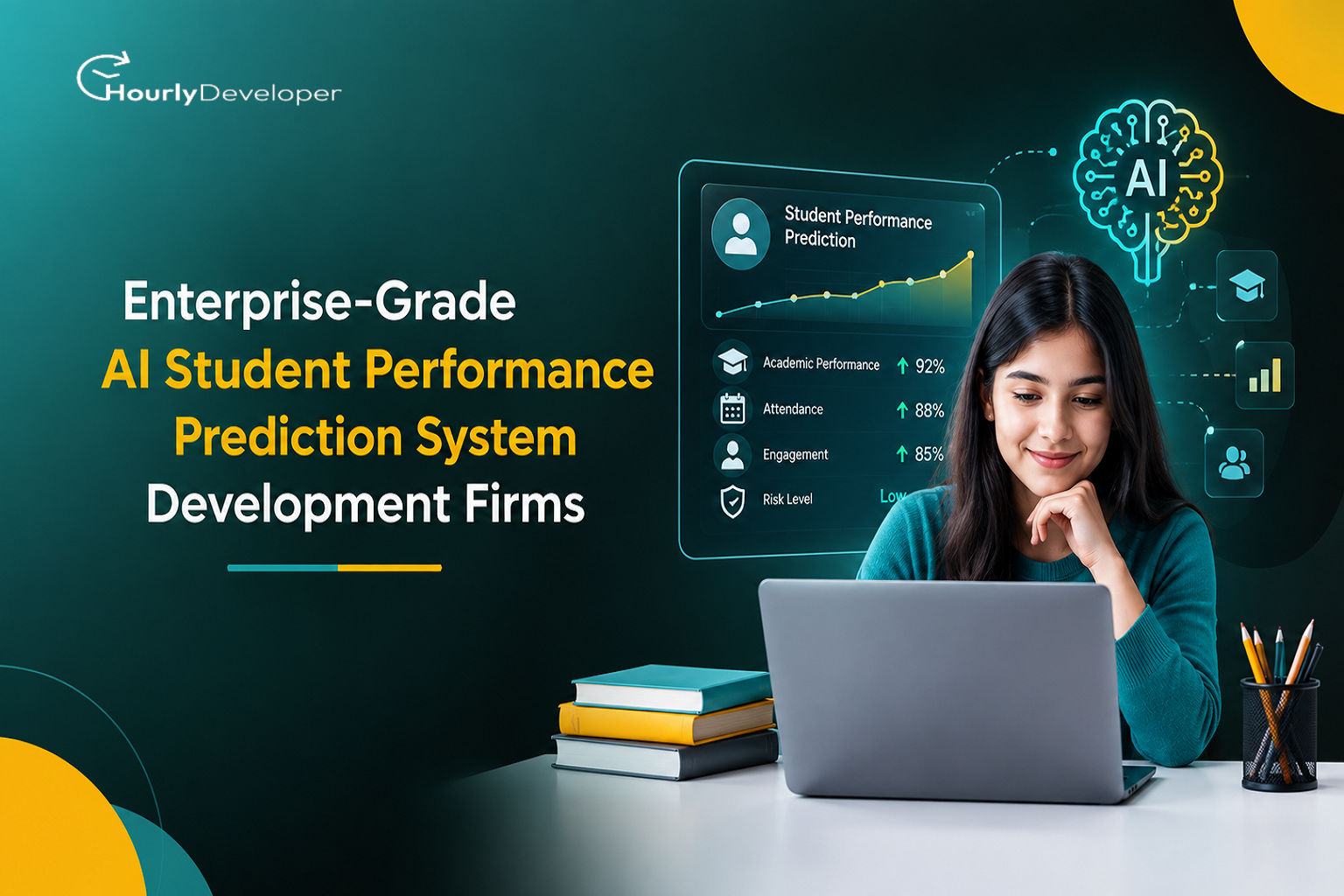
1.What Is an AI Student Performance Prediction System
An AI Student Performance Prediction System is software that studies a student’s academic and behavioral data, grades, attendance, assignment history, and engagement patterns, to forecast how they are likely to perform and flag early signs of academic risk before a report card ever confirms it.
Think of it as the difference between a rearview mirror and a dashboard warning light. A traditional gradebook tells you what already happened. A prediction system tells you what is likely to happen next, while there is still time for a teacher, advisor, or parent to actually do something about it.
These systems are showing up across three settings in 2026. K through 12 districts use them to catch chronic absenteeism before it turns into a dropout statistic. Universities use them to flag first year students likely to fail a gateway course. And edtech companies build prediction features directly into their learning platforms so every school using that software gets the benefit without running its own data science team.
2.How Does an AI Student Performance Prediction System Work
Every serious system follows the same five stage pipeline, even though the exact models and dashboards differ from vendor to vendor. Understanding these stages before you talk to a vendor makes it much easier to tell a firm that genuinely builds prediction systems apart from one repackaging a generic reporting dashboard with an AI label attached.
Data Collection
The system starts by pulling in data from every system a student touches during the school day, since a model is only as good as the range of signals it has access to.
- Grades and assessment scores
- Attendance records
- Assignment submissions
- LMS activity
- Engagement data
- Learning behavior patterns
- Demographic and institutional data
Data Processing and Preparation
Raw records are rarely usable straight out of the source system, so this stage cleans and structures everything first, and it is usually the stage that takes longest in a real project.
- Data cleaning to remove duplicate or corrupted records
- Missing value handling so gaps do not skew a prediction
- Feature engineering to turn raw fields into signals the model can actually use
- Data normalization across different grading scales and systems
AI and ML Model Development
This is where the actual prediction engine gets built, usually combining more than one modeling approach rather than relying on a single algorithm for every prediction.
- Classification models to sort students into risk categories
- Regression models to forecast specific scores or outcomes
- Time series analysis to track how performance trends over a semester
- Neural networks for deeper pattern recognition across large datasets
- Ensemble learning that blends multiple models for a more reliable result
Prediction and Risk Scoring
The output of the model gets translated into something an educator can actually act on, rather than a raw probability score nobody outside the data team can interpret.
- Student performance forecasting for upcoming assessments and terms
- At risk student identification, flagged early enough to matter
- Personalized risk scores rather than one generic label for every student
Intervention and Recommendations
A prediction is only useful if it leads to action, which is the final and arguably the most important stage of the entire pipeline.
- Alerts for educators the moment a risk threshold is crossed
- Personalized learning recommendations matched to the specific gap
- Automated intervention workflows that route a flagged case to the right staff member
With that groundwork in place, here are eighteen firms currently building AI powered prediction and analytics systems for schools, universities, and edtech platforms. Whether you plan to hire AI education software developers for a full custom build or bring in a smaller team to extend an existing platform, this list gives you a real starting point instead of a generic search results page.
3.18 Firms Building AI Student Performance Prediction Systems
1. HourlyDeveloper
| Founded |
2016 |
| Headquarters |
India, with US client coverage |
| Team Size |
150 to 250 |
| Specialization |
AI and full stack development on flexible hourly engagement |
HourlyDeveloper builds custom AI systems on an hourly billing model, which makes them a practical starting point for institutions that are not ready to commit to a large fixed price contract. Their teams have delivered predictive analytics and dashboard tools for education clients, and the hourly structure gives schools room to scale the engagement up once the first prediction model proves out. This works especially well for a pilot program covering a single department, since the institution only pays for the hours the build actually needs rather than a fixed scope drawn up before anyone understood the real complexity of the data.
2. Matellio
| Founded |
2012 |
| Headquarters |
Reno, Nevada, with delivery centers in India |
| Team Size |
100 to 200 |
| Specialization |
Enterprise AI and machine learning product development |
Matellio has built a name in enterprise AI consulting, and its education sector work leans heavily on predictive modeling and data pipeline design. Institutions considering a fully custom AI Student Performance Prediction System often shortlist Matellio for their structured discovery process, which maps out data sources before a single line of model code gets written. That upfront mapping tends to catch data quality problems early, which is usually the single biggest reason a prediction project runs over budget once development is already underway.
3. Simform
| Founded |
2010 |
| Headquarters |
Ahmedabad, India and San Francisco, California |
| Team Size |
500 plus |
| Specialization |
Cloud native software and AI platform engineering |
Simform pairs strong cloud infrastructure work with applied machine learning, which matters for institutions expecting a large volume of student data to process continuously. Their engineering teams have supported edtech platforms building analytics dashboards, and they are a solid fit for a school system planning to scale a prediction system across multiple campuses. Their cloud architecture background also helps when an institution wants the option to add new data sources later without a costly rebuild of the underlying pipeline.
4. Backend Development Company
| Founded |
2015 |
| Headquarters |
India |
| Team Size |
80 to 150 |
| Specialization |
Backend architecture and data pipeline engineering |
As the name suggests, this firm’s strength sits in the backend layer, the data pipelines, APIs, and infrastructure that a prediction model depends on to function reliably at scale. For an institution whose biggest bottleneck is disconnected student data systems rather than the model itself, this is often the more relevant starting point than a flashy front end demo. They typically pair well with a smaller design focused partner for the educator facing dashboard once the backend foundation is solid.
5. Intellectsoft
| Founded |
2007 |
| Headquarters |
Palo Alto, California |
| Team Size |
200 to 300 |
| Specialization |
Custom software and AI consulting for regulated industries |
Intellectsoft has a track record in sectors where data privacy carries real weight, healthcare and finance among them, and that discipline transfers directly to student data work, which is subject to similarly strict protection rules. Their AI consulting arm helps institutions define the right model architecture before committing to a full build, which reduces the risk of paying for a system that turns out to be more complex than the institution’s actual data can support.
6. ScienceSoft
| Founded |
1989 |
| Headquarters |
McKinney, Texas |
| Team Size |
700 plus |
| Specialization |
Data engineering, AI, and enterprise software consulting |
ScienceSoft’s long history in enterprise data work shows up in how they approach a prediction system, starting with a data audit rather than jumping straight to model selection. For larger universities juggling years of legacy student records across multiple platforms, that data first approach tends to save significant rework later in the project, particularly when historic grading scales or course codes have changed several times over the years.
7. Netguru
| Founded |
2008 |
| Headquarters |
Poznan, Poland |
| Team Size |
700 plus |
| Specialization |
Product design, AI, and full stack engineering |
Netguru brings a strong design sensibility alongside its engineering work, which matters more than most institutions expect since a risk dashboard that teachers find confusing simply will not get used. Their teams have built data heavy products across several regulated industries and translate that experience well into education focused analytics tools, with particular attention paid to how quickly a busy teacher can interpret a flagged student profile between classes.
8. HireFullStackDeveloperIndia
| Founded |
2017 |
| Headquarters |
India |
| Team Size |
100 to 180 |
| Specialization |
Full stack and AI application development |
HireFullStackDeveloperIndia offers end to end build capability, meaning a single team handles the data layer, the model, and the educator facing dashboard rather than juggling three separate vendors. That single point of ownership tends to shorten timelines for institutions that want one accountable partner for the entire prediction system, which also simplifies budgeting since there is only one contract and one invoice to track instead of several.
9. ValueCoders
| Founded |
2004 |
| Headquarters |
Gurugram, India |
| Team Size |
400 plus |
| Specialization |
Custom software outsourcing and AI development |
ValueCoders has built a reputation on dependable delivery timelines and transparent reporting, which appeals to school administrators who need predictable milestones for a board presentation. Their AI practice has grown steadily, with education and analytics projects becoming a larger share of their portfolio in recent years, and their reporting cadence tends to work well for institutions that need to keep a governing board updated on progress.
10. Konstant Infosolutions
| Founded |
2003 |
| Headquarters |
Jaipur, India |
| Team Size |
150 to 250 |
| Specialization |
Custom software, mobile, and AI integration |
Konstant Infosolutions works across a wide range of industries, and its AI integration team has picked up education projects that need a prediction engine layered onto an already existing student information system rather than built from scratch. That makes them a reasonable option for institutions that want to modernize gradually instead of replacing systems staff are already comfortable using.
11. Fingent
| Founded |
2003 |
| Headquarters |
Houston, Texas, with delivery centers in India |
| Team Size |
300 plus |
| Specialization |
Enterprise software and applied AI consulting |
Fingent has spent years building custom enterprise systems, and their consulting first approach means they typically spend real time understanding an institution’s existing data maturity before recommending a technical path. That tends to prevent institutions from overbuilding a system more complex than their actual data can support, which is a common and expensive mistake in first time AI projects.
12. OpenXcell
| Founded |
2009 |
| Headquarters |
Ahmedabad, India and Edison, New Jersey |
| Team Size |
200 to 300 |
| Specialization |
AI product engineering and custom software development |
OpenXcell runs a dedicated AI and machine learning practice separate from its general software teams, which is worth checking for when comparing vendors since not every firm structures its expertise that way. Their portfolio includes several data driven dashboard products relevant to how a risk scoring interface needs to function, and their dual location setup gives institutions overlapping working hours with a US based project lead.
13. HireAIDevelopers
| Founded |
2018 |
| Headquarters |
India |
| Team Size |
100 to 200 |
| Specialization |
Dedicated AI and machine learning development teams |
HireAIDevelopers focuses specifically on machine learning talent, which suits institutions that already have their data infrastructure in decent shape and mainly need strong modeling expertise for the prediction layer itself. Their engagement model allows schools to bring in a dedicated AI team without absorbing a full in house hiring process, and the team can typically be scaled up or down as a project moves between build and maintenance phases.
14. InData Labs
| Founded |
2014 |
| Headquarters |
Minsk, Belarus |
| Team Size |
80 to 130 |
| Specialization |
Applied machine learning and predictive analytics |
InData Labs is built almost entirely around machine learning and predictive analytics work, which is a narrower focus than most firms on this list but a relevant one for a project where the model quality is the whole point. Their case studies span several industries built around exactly this kind of risk scoring problem, which gives them relevant reference points even outside education specifically.
15. Itransition
| Founded |
1998 |
| Headquarters |
Denver, Colorado |
| Team Size |
700 plus |
| Specialization |
Custom AI software development and data science |
Itransition’s longevity in the industry means they have already navigated the compliance and data governance questions that come up repeatedly in education projects, from student privacy law to data retention policy. That experience shortens the discovery phase considerably compared to a newer firm learning those constraints for the first time on a live client project.
16. DataArt
| Founded |
1997 |
| Headquarters |
New York, New York |
| Team Size |
1000 plus |
| Specialization |
Data engineering, AI, and enterprise digital transformation |
DataArt operates at enterprise scale, which makes them a natural fit for large public university systems or multi campus networks that need a prediction system capable of handling very high data volume without performance issues. Their data engineering bench is deep enough to support the pipeline work most institutions underestimate until the project is already underway.
17. Appinventiv
| Founded |
2015 |
| Headquarters |
Noida, India |
| Team Size |
1500 plus |
| Specialization |
AI, machine learning, and enterprise app development |
Appinventiv has scaled quickly into a large AI development practice and has delivered predictive analytics products across healthcare, finance, and education sectors. For an institution comparing best AI student performance prediction software development companies, their combination of scale and dedicated AI research team is worth including in a shortlist, especially for a project that needs to move from pilot to full institution rollout quickly.
18. Space-O Technologies
| Founded |
2010 |
| Headquarters |
Ahmedabad, India and Toronto, Canada |
| Team Size |
150 to 250 |
| Specialization |
Custom app development and AI feature integration |
Space-O Technologies built its reputation on custom application development and has expanded into AI feature integration for existing platforms, which suits institutions that already have a student portal and want a prediction layer added on top rather than a system rebuilt from zero. Their dual North American and Indian presence also gives institutions a choice of time zone coverage for ongoing support.
A quick way to narrow this list is to separate firms into two groups. Ones like HireAIDevelopers and InData Labs that specialize narrowly in the modeling layer, and ones like DataArt and ScienceSoft built for large scale enterprise data work. Match the group to whichever part of your project is actually the hard part. If you are still comparing options at this stage, it helps to revisit the best AI student performance prediction software development companies through the lens of your own data maturity rather than picking whoever ranks highest on a generic list. A firm that is excellent at enterprise scale infrastructure is not automatically the right choice for a single campus pilot, and the reverse is just as true for a large multi institution rollout.
4.How to Evaluate a Development Partner Before You Sign
The company profiles above give you a starting shortlist, but a few practical questions during the vendor call tend to separate a strong partner from one that just talks a good game.
- Ask to see a real accuracy report from a past project, not a marketing case study with no numbers attached
- Ask exactly how much of your existing data they can work with as is, and how much needs cleanup before the model can even start training
- Ask who owns the model and the underlying code once the contract ends, since this varies a lot between firms and matters if you ever want to switch vendors
- Ask how false positives get handled operationally, not just technically, since a flagged student still needs a human conversation at some point
- Ask what a typical support retainer costs after launch, since the sticker price of the build is rarely the full cost of the relationship
None of these questions require a technical background to ask, and a firm that struggles to answer them clearly is telling you something important before you ever sign a contract. It is also worth requesting a short reference call with a past education client rather than relying on a written testimonial alone, since a five minute conversation tends to surface details a case study conveniently leaves out.
5.Benefits of Partnering With an AI Student Performance Prediction System Development Firm
Building this in house is possible for a handful of well resourced institutions, but most get more value once they hire AI developers through a specialized partner, for a few clear reasons.
Access to AI and ML expertise. Specialized firms bring modeling experience that takes years to build internally from scratch, and that experience shows up directly in how quickly early predictions start hitting a usable accuracy level.
Faster development. An experienced team skips the trial and error phase most in house builds get stuck in for months, since they have already solved similar data integration problems on prior projects.
Custom built solutions. A system designed around your actual data sources and grading structure outperforms a generic off the shelf tool built for a different kind of institution entirely.
Better scalability. A properly architected system handles growth from one campus to a full multi institution network without needing a costly rebuild once enrollment or data volume increases.
Security expertise. Student data carries strict privacy obligations that an experienced partner already knows how to meet, rather than treating compliance as an afterthought bolted on near launch.
Integration capabilities. A good firm connects the prediction system cleanly to your existing LMS and student information system so staff are not forced to learn an entirely separate tool.
Ongoing maintenance. Models drift over time and need regular upkeep, which a development partner typically includes post launch instead of leaving the institution to figure it out alone.
Model optimization. Continuous tuning keeps prediction accuracy high as new semesters and new data patterns come in, rather than letting accuracy quietly degrade after the first year.
Lower development risks. An experienced partner has already solved the mistakes a first time in house team would make from scratch, which protects both the budget and the timeline.
6.Estimated Development Cost
Budgets vary widely depending on how much of the system needs to be built from scratch versus layered onto existing infrastructure. Here is a realistic 2026 range.
| Solution Type |
Approx. Cost Range |
| Basic AI Prediction Platform |
$25,000 to $50,000 |
| Mid-Level Enterprise Platform |
$50,000 to $100,000 |
| Advanced Enterprise AI Platform |
$100,000 to $250,000+ |
| Large Multi-Institution Platform |
$250,000+ |
What Actually Drives the Price
- How many separate source systems the platform needs to pull data from, since every extra integration adds real engineering time
- Whether historical data needs significant cleanup before a model can be trained on it reliably
- How many campuses or institutions the system needs to serve at launch versus down the road
- Whether the educator facing dashboard needs custom design work or can use a simpler off the shelf interface
- How much ongoing model retraining and support the institution wants included in the initial contract versus billed separately later
Where a firm’s engineering team is based also shifts the number noticeably. Teams based in North America or Western Europe generally sit at the higher end of every range above, while firms headquartered in India, Eastern Europe, or Southeast Asia can often deliver comparable work at a lower cost, particularly for the data engineering and pipeline stages. That gap narrows considerably once you get into specialized machine learning work, where experienced modeling talent commands a similar rate almost everywhere.
7.Final Thought
Here is the honest question worth sitting with before you contact a single firm on this list. If your institution had access to an accurate risk score for every student starting tomorrow, would your current staff actually have the bandwidth to act on it? A prediction system is only as useful as the intervention behind it, so the technology decision and the staffing decision need to happen together, not one after the other.
The eighteen firms above range from narrow AI specialists to full enterprise partners, and the right one depends entirely on where your institution’s real gap sits, in the data, in the modeling, or in the follow through. Whichever AI Student Performance Prediction System you eventually build, the students who benefit most will be the ones nobody would have noticed in time otherwise. That is worth remembering the next time a vendor pitch leans heavily on dashboards and buzzwords instead of talking about the actual students behind the numbers.
If your team decides to hire AI education software developers to get there, come to the first call with your data sources mapped out. That single piece of preparation will save more time than any amount of vendor comparison.
 Back to Blog