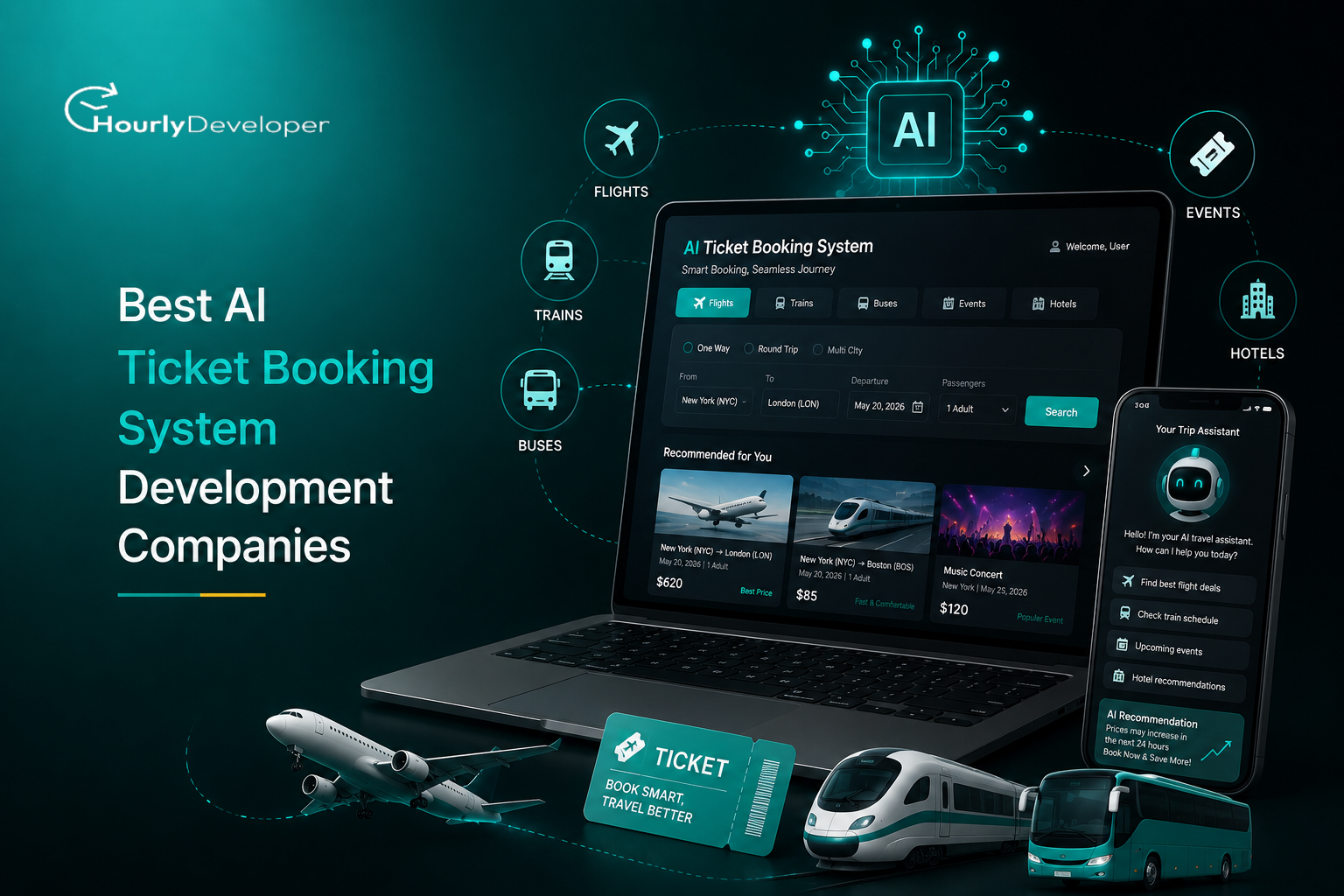
Best AI Ticket Booking System Development Companies
Introduction
Best AI Ticket Booking System Development Companies
1.What Exactly Is an AI Ticket Booking System
At its simplest, an AI Ticket Booking System is a platform that lets people search, reserve, and pay for tickets while machine learning models work quietly in the background. Instead of a static seat map and a fixed price list, the system watches booking patterns and adjusts in real time. It flags a spike in demand for a Saturday show and nudges the price up slightly. It notices a booking pattern that looks suspicious, like the same card attempting twenty purchases in ninety seconds, and holds the transaction for review before it becomes a chargeback problem.
Good platforms also handle the boring parts well. Refunds, seat changes, waitlists, and payments in multiple currencies should all feel instant to the customer, even though there is a lot happening underneath. This is where AI ticket booking software development earns its cost. A well built system can cut support tickets by a wide margin simply because customers stop needing to call anyone, and it can recover revenue that would otherwise be lost to fraud or abandoned checkouts.
It is worth separating this from a plain online ticket booking software development project, which usually just digitizes a paper process without adding any intelligence to it. A basic booking website can take payments and issue confirmation emails just fine, but it will not tell an organizer that Thursday’s show is trending toward a sellout three days early, or notice that a batch of bookings all share the same device fingerprint. That gap between a booking website and a genuinely smart booking platform is exactly what the companies on this list are built to close.
2.What to Check Before You Hire a Development Partner
Not every software vendor that lists “AI” on their homepage has actually shipped a booking platform that handles real money and real seats. Before signing anything, ask to see a live or recorded demo of a booking flow the company built previously, not just a slide deck. Ask how they handle peak load, since a system that works fine for 200 concurrent users can fall over completely at 20,000 during a popular concert on sale.
It also helps to ask directly about post launch support. Online ticket booking software development does not end at deployment. Payment gateways change their APIs, fraud patterns shift, and event organizers usually want new features within the first few months. The companies below were chosen because they have a track record of sticking around after go live, not just handing over the code and disappearing.
Pricing structure matters too, and it is worth asking upfront rather than after a proposal lands. Some vendors quote a flat project fee, others prefer dedicated team billing by the month, and a growing number offer hourly arrangements for businesses that just need to hire AI ticket booking developers for a specific feature rather than a full rebuild. None of these models is inherently better, but the wrong one for a given budget and timeline can quietly cause friction later. It is fair to ask a shortlisted vendor to explain why they recommend one pricing model over another for the specific project in question, rather than defaulting to whatever they usually sell.
3.The 15 Best AI Ticket Booking System Development Companies
On demand AI and full stack developer staffing for booking and reservation platforms
Best For
Startups and event businesses that want to scale a dev team up or down by the hour
Pricing Model
Hourly and monthly retainer models, flexible team sizing
HourlyDeveloper built its whole model around flexibility. Instead of locking a client into a fixed project scope, it lets businesses bring on AI ticket booking developers for exactly as many hours as a sprint needs, then scale the team back down once the feature ships. This works particularly well for event companies with seasonal spikes, since a Formula 1 weekend or a music festival on sale needs a bigger dev team for a few weeks, not all year. New clients typically start with a short paid trial sprint before committing to a longer engagement, which lowers the risk of a mismatch on either side.
High load backend architecture, API design, and database optimization for ticketing platforms
Best For
Businesses that already have a frontend and need a booking engine that will not buckle under traffic spikes
Pricing Model
Project based and dedicated team pricing
Backend Development Company specializes in exactly what its name suggests, the plumbing that keeps a booking system upright when 50,000 people try to buy tickets in the same ten minutes. Its engineers focus heavily on queueing systems, database sharding, and caching layers so seat locks do not collide and double bookings do not happen. For any brand where the front end already looks good but the backend keeps crashing during high demand on sales, this is a natural fit. It is common for this team to be brought in specifically to audit an existing system before a major on sale, rather than to build something from the ground up.
End to end IT consulting with deep experience in custom software and AI integration
Best For
Enterprises that want a single long term technology partner rather than a project vendor
Pricing Model
Custom quotes based on scope, typically mid to high budget range
ScienceSoft has been building software since long before machine learning was a buzzword, and that decades long track record shows in how methodically it approaches new builds. Its teams handle everything from business analysis to post launch support, which matters a lot for ticketing platforms that need to stay compliant with payment regulations across different countries. Larger event networks and transportation companies tend to favor ScienceSoft because of this full lifecycle support. Its size also means it can pull in specialists such as dedicated security engineers or data analysts mid project if a scope changes, rather than stretching a small core team thinner.
AI powered mobile and web product engineering across travel, retail, and entertainment sectors
Best For
Brands that want a polished consumer facing app alongside the booking backend
Pricing Model
Mid to premium project based pricing
Appinventiv has built a name for itself in AI powered product design, and that design first instinct carries over well into ticketing. A booking app is only as good as its checkout flow, and this is a team that clearly understands how a few extra taps at checkout can cost a client real revenue. Its work spans fintech and retail as well, so it brings solid experience handling secure payments at scale. Clients working with Appinventiv typically go through a structured discovery phase first, which helps catch expensive design mistakes before development even starts.
Ahmedabad, India, with offices in the United States
Core Focus
Cloud native software engineering, legacy system modernization, and AI integration
Best For
Businesses migrating an old booking system to a modern, scalable cloud architecture
Pricing Model
Project and dedicated team models, transparent hourly rates
Simform is a strong pick for any organization stuck with an aging ticketing system that was never designed for today’s traffic. Its specialty is untangling legacy code and rebuilding it on cloud infrastructure without breaking existing customer data or integrations. For cinema chains or bus operators still running booking software from a decade ago, this kind of modernization work is often more valuable than starting from scratch. Simform also tends to be transparent about timelines during migrations, flagging early on which legacy features are worth rebuilding and which ones are quietly costing more to maintain than they are worth.
Full stack development talent for web and mobile booking applications
Best For
Companies that need a single team to handle frontend, backend, and database work together
Pricing Model
Competitive hourly rates, dedicated resource model
HireFullStackDeveloperIndia positions itself as a one stop shop for teams that do not want to juggle separate frontend and backend vendors. Its developers work across the entire stack, which tends to shorten development timelines since fewer handoffs mean fewer miscommunications between teams. This makes it a practical option for smaller event platforms that need a booking system live within a few months rather than a year. Clients also appreciate that resource costs stay predictable, since teams are typically hired on fixed monthly rates rather than fluctuating project quotes.
Custom enterprise software with strong IoT, AI, and digital transformation experience
Best For
Larger organizations that want a design led approach to a complex booking ecosystem
Pricing Model
Enterprise level project pricing
Intellectsoft leans heavily on design before writing a single line of code, which matters more than people expect in ticketing software. A confusing seat selection screen or an unclear refund policy page quietly drives customers away, and this team spends real time mapping out user journeys before development begins. Its work with Fortune 500 clients also means it is comfortable navigating the compliance requirements that come with handling payment data at scale. Businesses that have been burned before by a technically sound but confusing booking flow tend to gravitate toward this team specifically because of its design heavy process.
Dedicated AI and machine learning engineering talent for recommendation and pricing systems
Best For
Businesses that already have a booking platform and want to bolt on smarter AI features
Pricing Model
Hourly and monthly hiring models
HireAIDevelopers focuses narrowly on the AI layer rather than trying to be a full service software house, and that focus shows in the depth of its machine learning work. Dynamic pricing engines, no show prediction models, and personalized seat recommendations are the kind of features this team builds well. Event platforms that already have a working booking flow but want it to feel noticeably smarter often bring this team in for exactly that upgrade. Because the scope stays narrow, projects with this team also tend to move faster than a full platform rebuild, often shipping a working model within a matter of weeks.
Custom software development with dedicated travel, hospitality, and entertainment practice
Best For
Mid sized to large ticketing platforms needing a broad range of technical expertise under one roof
Pricing Model
Project based, mid to premium range
Itransition has been around long enough to have worked across nearly every industry that touches reservations, from airlines to live events. That breadth means its teams rarely encounter a booking requirement they have not solved before in some form, whether that is dynamic seating charts or group booking discounts. It is a comfortable choice for organizations that want a vendor who will not need much hand holding on industry specific quirks. Its long history also means it has weathered several waves of payment regulation changes already, which is reassuring for businesses operating across multiple countries.
AI, machine learning, and IoT focused software engineering studio
Best For
Businesses that want an AI first approach baked into the booking system from day one
Pricing Model
Custom quotes, mid range project pricing
Matellio builds from an AI first mindset rather than treating machine learning as an add on feature at the end of a project. For a ticketing platform, that shows up in things like predictive demand models that inform pricing before an event even goes on sale, not just after. Teams looking to build a genuinely intelligent AI Ticket Booking System rather than a booking form with a chatbot bolted onto it tend to find this approach refreshing. Matellio’s smaller studio structure also tends to mean more direct access to senior engineers, rather than communicating through several layers of account management.
Offshore software development with a strong track record in travel and booking platforms
Best For
Budget conscious businesses that still want an experienced, well reviewed development team
Pricing Model
Competitive offshore rates, hourly and fixed price models
ValueCoders has built up over two decades of client relationships, and a large share of its portfolio touches booking and reservation software in some form. Its appeal is fairly straightforward, solid engineering quality at a price point that does not require an enterprise budget. For smaller venues or regional transport companies comparing top AI ticket booking software development companies on cost as much as capability, this is usually one of the first names that comes up. Its long operating history in India also means it has a deep enough bench of developers to backfill a team member quickly if someone leaves mid project, which smaller shops sometimes struggle with.
Global IT consultancy with deep experience in travel, hospitality, and fintech software
Best For
Enterprises needing a partner comfortable with complex integrations and regulatory compliance
Pricing Model
Enterprise pricing, custom scoped
DataArt operates at a scale that suits large, multi region ticketing operations rather than a single venue booking page. Its travel and hospitality practice has handled everything from airline reservation systems to hotel booking engines, so the jump to event and transport ticketing is a natural one. Businesses juggling multiple currencies, tax jurisdictions, and payment providers tend to appreciate how comfortably this team handles that complexity. DataArt also maintains development hubs across several countries, which makes round the clock support coverage more realistic than it is for smaller, single office vendors.
Custom software and mobile app development with growing AI and machine learning practice
Best For
Businesses wanting a full mobile and web booking app built by one accountable team
Pricing Model
Project based, mid range pricing
OpenXcell has spent over a decade building mobile first products, and ticketing today is very much a mobile first business since most customers book from a phone rather than a desktop. Its recent expansion into AI development means it can now layer in features like smart notifications and personalized event recommendations on top of a solid booking core. It is a well rounded option for businesses that want one team accountable for both the app and its intelligence layer. OpenXcell also tends to price competitively compared to similarly sized US or UK based firms, which matters for businesses trying to keep a healthy margin on ticket sales.
Web and mobile application development for booking, ecommerce, and enterprise platforms
Best For
Small and mid sized businesses needing a dependable, no frills booking platform
Pricing Model
Affordable project based rates
Konstant Infosolutions has built a reputation on dependable delivery rather than flashy marketing, which is exactly what a lot of smaller ticketing businesses actually need. Its teams have worked across booking, ecommerce, and enterprise software long enough to know the common pitfalls, like poorly tested payment gateway integrations that only fail during a live event. For businesses that want steady execution over experimental features, this is a safe and cost effective choice. Its regional pricing also tends to be friendlier than larger global agencies, which matters for venues and organizers running on tighter margins.
Custom software consulting with experience across travel, healthcare, and logistics booking systems
Best For
Businesses wanting a consultative partner that helps shape the product strategy, not just the code
Pricing Model
Mid to premium project based pricing
Fingent tends to get involved earlier in the process than many development shops, sitting in on strategy conversations before a single wireframe exists. That consultative style is useful for businesses that know they need a better booking system but are not entirely sure yet what features will actually move the needle. Its cross industry experience in logistics and travel also means it understands scheduling and capacity problems that are close cousins to ticketing. This consultative approach does tend to stretch out the early planning phase, so it suits businesses that are not in a rush to launch within a few weeks.
4.What Ticketing Platforms Are Prioritizing in 2026
The conversation around ticketing software has shifted noticeably over the past year. Fraud prevention used to be treated as an afterthought bolted onto checkout, but in 2026 it is usually part of the core architecture from day one, since bot driven scalping has gotten sophisticated enough to defeat basic CAPTCHA checks. Dynamic pricing has also matured past simple surge pricing, with models now factoring in weather, competing local events, and even social media buzz around a performer or team.
Another shift worth noting is how much support has moved to conversational AI. Customers expect to resolve a seat change or a refund through a chat window at midnight, not by waiting for a call center to open. Any company on this list building a modern AI Ticket Booking System should be able to speak comfortably about how their platform handles these three areas, fraud, pricing, and support automation, since together they tend to separate a genuinely useful platform from a basic booking form with a fresh coat of paint.
Mobile behavior has also changed the priorities for a lot of these builds. A growing share of bookings now happen on a phone in the final minutes before an event, often while someone is already standing in line, which puts real pressure on how fast a checkout screen loads and how few taps it takes to complete a purchase. Vendors that treat mobile as an afterthought tend to lose a noticeable share of last minute sales to competitors whose apps simply respond faster under pressure.
5.What Actually Drives the Cost of a Booking Platform
Cost is usually the first question on everyone’s mind, and the honest answer is that it depends far more on complexity than most quotes suggest. A single venue booking page with a fixed seat map is a fairly contained project. A multi venue platform with dynamic pricing, waitlists, group discounts, and fraud detection is a different scale of build entirely, and the price tag reflects that gap.
The AI layer itself tends to add less to the budget than people expect, often somewhere between 15 and 25 percent on top of a standard booking build, since most vendors now reuse proven fraud and pricing models rather than building them from scratch each time. What actually pushes costs up is integration work, things like connecting to five different regional payment processors, or syncing with an existing customer database that was never designed to talk to new software. Any of the top AI ticket booking software development companies listed here should be able to break this down clearly during the first scoping call, rather than handing over one lump number with no explanation of what is driving it.
It is also worth budgeting separately for the months right after launch, since this is when the real cost of a booking platform tends to show up. Payment gateways occasionally change their required fields without much warning, fraud patterns shift as bad actors adapt to whatever rules were just put in place, and customers inevitably ask for small feature changes once they start using the system daily. A support retainer covers this, and skipping it to save money upfront usually costs more later in emergency fixes.
6.A Few Warning Signs Worth Watching For
Beyond checking a portfolio, a few warning signs tend to show up consistently across vendors that later disappoint their clients. One is vague answers about load testing, since any team that has genuinely built ticketing software for a high demand event will have a specific number in mind for how many concurrent users their system has handled, not just a general assurance that it will be fine.
Another warning sign is a vendor that cannot clearly explain how their fraud detection actually works beyond saying it uses AI. Real fraud prevention involves specific signals, things like device fingerprinting, velocity checks on repeated card attempts, and behavioral patterns that differ from a genuine customer. A team that gets vague or defensive when asked to walk through this in plain language is often newer to ticketing than their marketing suggests, and that inexperience tends to surface at the worst possible moment, during a high traffic on sale rather than a quiet testing period.
A third sign worth paying attention to is how a vendor talks about timelines. Anyone promising a full featured booking platform with dynamic pricing and fraud detection in two or three weeks is either reusing a template far more than they are letting on, or setting expectations that will not survive contact with a real launch. Honest vendors tend to give a range rather than a single confident number, and explain upfront which parts of the timeline depend on decisions the client still needs to make.
7.Final Thoughts
There is no single best vendor on this list, and honestly, anyone promising a one size fits all answer probably has not built enough of these systems to know better. A regional bus operator with a tight budget has very different needs from a national ticketing network processing millions of transactions during a major tour on sale.
What matters more than the company name is asking pointed questions before signing anything. How does the platform handle a sudden traffic spike? What happens if a payment gateway goes down mid transaction. Who is available three months after launch if something breaks. Get clear answers to those three questions from any of the 15 companies above, and the choice usually becomes obvious fairly quickly.
It is also worth remembering that the best partner is rarely the one with the flashiest pitch deck. It is the one that asks harder questions back, about expected traffic, existing systems, and what actually goes wrong during a busy weekend. That kind of curiosity, more than any single feature list, tends to be the clearest sign of a team that has genuinely done this work before and knows where the real risks sit.
With a love for connecting with people and a flair for communication, Prachi's expertise in digital marketing is unmatched. Her strategic approach to campaigns ensures our brand's story reaches far and wide, making an impact on the lives of countless individuals.
Frequently Asked Questions
Most custom builds take between 4 and 9 months depending on complexity. A basic booking flow with payment integration can launch in 8 to 10 weeks, while a full platform with dynamic pricing, fraud detection, and multi venue support usually needs 6 months or longer, plus additional time for load testing before a public launch.
Costs generally range from $15,000 for a simple booking app to $150,000 or more for an enterprise platform with AI pricing and fraud tools. Offshore teams in India or Eastern Europe often bring costs down by 30 to 50 percent compared to US agencies, without necessarily sacrificing quality. Ongoing hosting and payment processing fees add to the total each month.
Yes, many vendors on this list specialize in adding AI modules onto existing platforms rather than starting over. Common add ons include demand forecasting, fraud scoring, and chatbot support. This approach is usually 40 to 60 percent cheaper than a full rebuild and can often be completed in 8 to 12 weeks.
Look for PCI DSS compliance at minimum, since this covers secure card data handling. Vendors serving European markets should also support PSD2 and Strong Customer Authentication. ISO 27001 certification is a good additional signal that a company takes data security seriously beyond just payment processing, and worth confirming directly rather than assuming from a website badge.
Most vendors offer monthly retainer packages for post launch support, typically ranging from $1,500 to $8,000 depending on platform size and response time guarantees. Some also offer pay as you go hourly support for smaller fixes, which suits businesses that only need occasional maintenance rather than a dedicated team on standby year round.
Find exceptional developers at Hourlydeveloper. Get the expertise, solutions, and teamwork you need for success. Hire developers easily and boost your projects today!
 Back to Blog