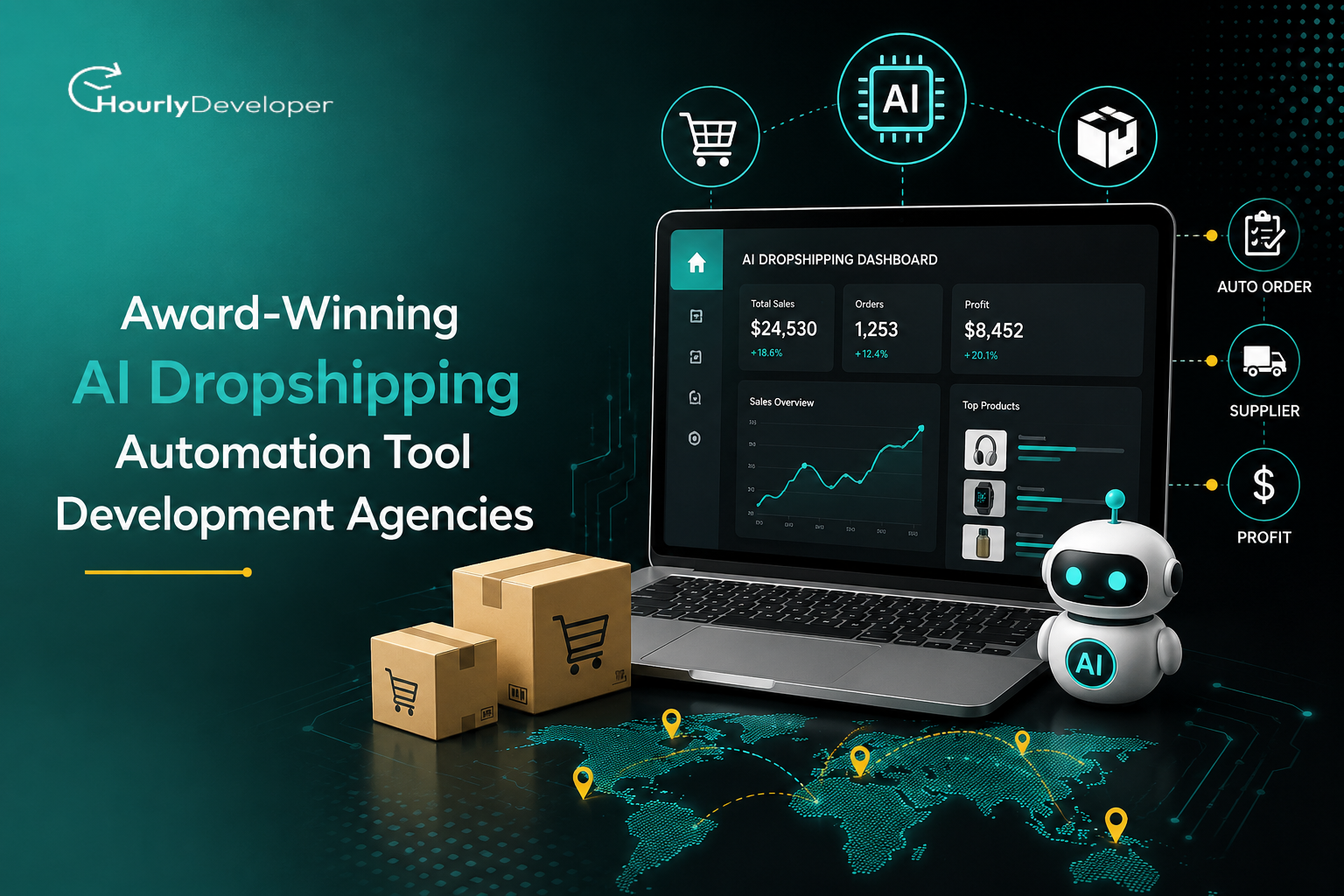
1.Why Every Ecommerce Brand Is Investing in Automation Right Now
Dropshipping margins have gotten tighter, and customers expect faster responses than ever before. Store owners can no longer afford to manually track supplier stock, adjust prices by hand, or respond to hundreds of customer queries every single day. An AI-powered system that handles these tasks in real time, and never needs a day off, has become less of a luxury and more of a survival tool. This is also why so many businesses are choosing to hire AI dropshipping developers instead of relying on generic, off-the-shelf plugins that were never built with their specific catalog or supplier network in mind.
A custom-built tool adapts to how a business actually operates, which off-the-shelf software simply cannot do. It can be trained on your actual sales history, your actual suppliers, and your actual customer patterns, rather than forcing your operations to fit inside someone else’s assumptions. For founders juggling multiple sales channels, several suppliers across different regions, and a support inbox that never seems to empty out, this difference alone can be the reason a store stays profitable or slowly loses ground to faster-moving competitors. Even small brands with a handful of products are finding that a modest amount of automation frees up enough time each week to focus on marketing, sourcing new products, or simply keeping up with the pace customers now expect.
2.What Sets These Agencies Apart
Not every development company that lists “AI” on its website actually has the engineering depth to build something reliable. The agencies featured below were selected because they combine strong technical teams with real experience in ecommerce workflows, including supplier integrations, inventory syncing, and order automation. Many of them are recognized among the best AI dropshipping automation software development companies because of their client retention, delivery timelines, and post-launch support, not just a flashy portfolio.
We also paid attention to how transparent each agency is about pricing, timelines, and communication, since founders comparing multiple vendors need clarity far more than they need marketing buzzwords. Below is a mix of established players and rising names worth your attention, ranging from teams that specialize in one narrow piece of the automation puzzle to agencies that offer a full end-to-end platform under a single contract. A few of these teams are large enough to run multiple projects in parallel, while others are intentionally smaller and take on fewer clients at a time, which can mean closer attention to detail depending on what you value more.
3.18 Agencies Worth Shortlisting in 2026
1. HourlyDeveloper
HourlyDeveloper has built a strong reputation among founders who want to hire AI dropshipping developers on a flexible, hourly basis instead of committing to a large fixed-cost project upfront. The agency handles everything from automated supplier sourcing to AI-driven pricing engines, and its hourly model works especially well for startups that need to scale their tech team up or down as demand shifts throughout the year. Clients frequently mention the transparency of their weekly reporting and how quickly their developers pick up mid-project work handed over from other teams without losing momentum. Their engineers are also comfortable working across multiple ecommerce platforms, which means founders are not locked into rebuilding their store just to bring this team on board. If you already have a partial build and need a team that can step in fast, Hourly Developers is worth a serious look.
2. NextGen AI Commerce Labs
NextGen AI Commerce Labs focuses almost entirely on ecommerce automation, and its team has shipped dozens of custom dashboards that combine supplier data, ad spend, and customer behavior into a single AI-driven view. What makes them stand out is their emphasis on predictive restocking, meaning their systems flag low inventory before it becomes a problem instead of after a store already runs out of a bestselling item. Founders working with multiple suppliers across different countries tend to gravitate toward this agency because of how well its tools handle currency conversion and shipping-time estimates automatically. Their project managers are also known for setting realistic timelines rather than overpromising, which many clients say saved them from painful delays later on.
3. HireAIDevelopers
As the name suggests, HireAIDevelopers built its entire business model around helping brands hire AI dropshipping developers for both short-term sprints and long-term product builds. The company maintains an in-house bench of machine learning engineers who specialize in recommendation engines and dynamic pricing models, two of the most requested features among dropshipping clients. Their onboarding process is unusually fast, often getting a dedicated developer assigned within a few days of the first call, which matters a lot to founders working under tight timelines. Beyond development, the team also offers a short discovery phase where they audit a store’s existing tech stack before recommending what to build first, which helps avoid wasted spend on features that would not move the needle.
4. DropshipTech Innovators
DropshipTech Innovators built its name by solving one specific pain point extremely well, which is automated order routing between multiple suppliers. Their platform decides in real time which supplier should fulfill an order based on stock levels, shipping speed, and cost, removing a huge amount of manual decision-making for store owners who previously had to check three or four supplier dashboards before confirming a single order. The team is relatively lean but highly specialized, and they are known for detailed onboarding calls where they map out a client’s exact supplier network before writing a single line of code. This upfront planning tends to reduce costly revisions later in the project. Founders juggling three or more suppliers for the same product category tend to see the clearest benefit, since the platform effectively removes the daily juggling act that used to eat up hours of their week.
5. AI Commerce Architects
AI Commerce Architects positions itself as a long-term technology partner rather than a one-off vendor, and many of its clients have worked with the team for multiple years as their stores scaled from a handful of orders a day to thousands. Their strength lies in building modular systems, so a brand can start with basic price automation and later add customer service bots, fraud detection, and analytics dashboards without rebuilding the entire platform from the ground up. This agency tends to work best for brands planning significant growth over the next few years rather than needing a quick, one-time fix for a single problem. Their account managers also schedule quarterly strategy reviews with clients, which keeps the roadmap aligned with where the business is actually headed instead of where it stood when the contract was first signed.
6. Backend Development Company
Backend Development Company brings a slightly different angle to this list because its core strength is infrastructure rather than front-facing features. Founders who already have a UI or app built often bring in this team to construct the backend systems that power inventory syncing, API integrations with suppliers, and database architecture capable of handling spikes in order volume during flash sales or viral moments. Their engineers are particularly experienced at building systems that stay stable even when a store suddenly goes viral and order volume multiplies overnight, which is exactly the kind of stress test many automation tools fail without solid backend planning. They also offer a code and architecture audit as a standalone service, which is useful for founders who simply want a second opinion on a system another vendor already built for them.
7. Cloudstack AI Solutions
Cloudstack AI Solutions leans heavily into cloud infrastructure, which makes sense given the name, and its automation tools are built to scale horizontally as a brand’s order volume grows across regions. The agency is a strong choice for founders who are already thinking about international expansion, since their systems are designed from day one to handle multiple currencies, tax rules, and warehouse locations without requiring a rebuild later. Clients often highlight the responsive support team as a key reason for staying with them long term, noting that urgent issues rarely take more than a few hours to get addressed. Their pricing is usually structured around infrastructure usage rather than a flat monthly fee, which some founders prefer since it scales down naturally during slower sales periods.
8. PixelForge AI Agency
PixelForge AI Agency is known for blending strong design sensibility with functional automation, meaning the dashboards and admin panels its team builds tend to be genuinely pleasant to use rather than purely functional and clunky. For founders who plan to eventually bring on non-technical staff to manage day-to-day operations, this focus on usability can save a significant amount of training time and reduce onboarding headaches. Their AI models cover product recommendation and abandoned cart recovery, both of which directly affect revenue, and their reporting dashboards make it easy for a small team to keep track of performance without needing a data analyst on staff. Their design team also runs quick usability sessions with the client’s actual staff before a project is signed off, which catches confusing workflows early instead of after the tool is already in daily use.
9. HireFullStackDeveloperIndia
HireFullStackDeveloperIndia offers a cost-effective option for founders who want a single team capable of handling both the customer-facing storefront and the backend automation logic. Built on strong full-stack expertise, the company creates everything from AI chatbots that handle customer queries to backend systems that automatically reorder stock from suppliers once inventory drops below a set threshold. Their pricing tends to be more accessible than many Western agencies, which makes them a popular choice among early-stage founders working with limited budgets who still want a genuinely capable, in-house style team rather than a patchwork of freelancers. Time zone overlap can be a minor consideration for some clients, though most report that a couple of hours of daily overlap has been enough for smooth day-to-day communication.
Automation Hive specializes in workflow automation across the entire order lifecycle, connecting supplier APIs, payment gateways, and shipping carriers into one system that requires minimal manual intervention from the store owner. The agency’s reporting tools are particularly detailed, giving founders a clear view of exactly where bottlenecks occur in their fulfillment process, whether that is a slow supplier, a payment delay, or a shipping carrier that consistently underperforms. Teams that value data transparency over flashy marketing tend to prefer working with Automation Hive, and many clients mention sticking with them purely because of how clearly the team communicates progress. Weekly written updates are standard practice here rather than an optional extra, which founders managing several vendors at once tend to appreciate.
SmartCart AI Developers built its reputation on cart recovery and personalization tools, using machine learning to predict which products a returning visitor is likely to buy and adjusting the storefront accordingly in real time. Their systems integrate directly with popular ecommerce platforms, so founders do not need to rebuild their existing store from scratch to take advantage of the automation, which significantly shortens the time it takes to see results after signing on. The team also runs A/B tests on recommendation placement as part of their standard delivery process, so clients get ongoing optimization rather than a system that is simply switched on and left untouched.
RetailBot Technologies focuses on customer-facing AI, particularly chatbots that can handle order status questions, returns, and basic troubleshooting without human intervention around the clock. Their bots are trained specifically on ecommerce and dropshipping scenarios rather than generic customer service templates, which noticeably improves response accuracy compared to more generic chatbot providers. Brands with high order volume and limited support staff often find this agency’s tools reduce ticket volume significantly within the first few months of going live. The agency also offers multilingual bot training as an add-on, which has made them a popular pick for stores selling across several regions at once.
13. Bytewise AI Solutions
Bytewise AI Solutions takes a data-first approach, building forecasting tools that help founders decide which products to add to their catalog based on trend data and supplier reliability scores gathered over time. Their team is smaller than some competitors on this list, but clients consistently mention the depth of analysis behind every recommendation the platform makes, which is part of why they keep showing up on independent lists of the best AI dropshipping automation software development companies compiled by industry reviewers each year.
14. ScaleUp AI Ventures
ScaleUp AI Ventures works primarily with brands that have already found product-market fit and are now looking to automate operations so they can grow without proportionally growing their team size or overhead. Their tools cover supplier negotiation support, bulk order automation, and margin tracking across multiple sales channels at once, giving founders a single place to monitor profitability instead of piecing information together from several spreadsheets. Their consultants also tend to push back constructively when a client requests a feature that would not actually move profitability, which some founders find refreshing compared to agencies that simply build whatever is asked.
15. Nimbus Commerce Tech
Nimbus Commerce Tech is known for its strong integration library, connecting with dozens of supplier platforms and marketplaces so founders are not locked into a single sourcing channel or region. This flexibility appeals particularly to brands that source products from multiple countries and need one dashboard to manage all of it, rather than logging into a separate portal for every supplier relationship they maintain. New integrations are typically added within a couple of weeks of a client requesting them, which is faster than what most competitors on this list can commit to in writing.
16. Quantum Dropship Labs
Quantum Dropship Labs specializes in pricing automation, using AI models that adjust product prices in real time based on competitor pricing, supplier cost changes, and demand fluctuations throughout the day. Founders who have struggled with manually updating prices across hundreds of SKUs often see the fastest return on investment with this particular agency, since pricing errors and missed markup opportunities tend to disappear almost immediately after launch. The team is also transparent about the assumptions behind each pricing rule, so store owners are never left guessing why a particular product’s price changed overnight.
17. Vertex AI Commerce Solutions
Vertex AI Commerce Solutions offers a broader suite covering everything from fraud detection to automated customer segmentation, making it a solid choice for founders who want most of their automation needs handled under one contract rather than piecing together multiple vendors and juggling separate invoices, support channels, and update schedules. Clients who have consolidated several smaller vendors into this one team often mention that the switch alone reduced the amount of time they personally spent managing their tech stack each week.
18. CartLogic AI Studio
CartLogic AI Studio rounds out this list with a strong focus on post-purchase automation, including automated shipping updates, review requests, and reorder reminders sent at exactly the right moment based on a customer’s past buying pattern. Their tools are designed to increase repeat purchase rate without adding extra manual work for the store’s support team, which is often the last piece founders think to automate even though it can meaningfully affect long-term revenue. Several of their clients report a noticeable bump in repeat orders within the first quarter of using the system, largely because reminders go out at moments the customer is actually likely to be ready to buy again.
4.Final Thoughts
Choosing the right technology partner for your store is not a decision to rush, and the agencies above represent a genuine mix of specializations rather than a generic list padded out to hit a number. Some, like Hourly Developers and HireAIDevelopers, are built specifically around flexible hiring models, while others focus on a single piece of the puzzle such as pricing, chatbots, or backend infrastructure. What matters most is matching an agency’s strength to what your store actually needs right now, rather than chasing the biggest name on the list or the flashiest case study.
As dropshipping continues to get more competitive heading into 2026 and beyond, having a dependable AI Dropshipping Automation Tool built by one of these award-winning AI dropshipping automation tool development agencies could be the difference between a store that scales smoothly and one that burns its founder out trying to keep up manually. Take the time to have a few discovery calls, ask for references, and pick the team that understands your specific supplier setup best, because the right fit will always matter more than the longest feature list. Even a short trial project, covering just one automation feature, can tell you more about how an agency actually works than any pitch deck or case study ever could, and it is a low-risk way to confirm you have found the right long-term partner before committing to a bigger build.
 Back to Blog