Back to Blog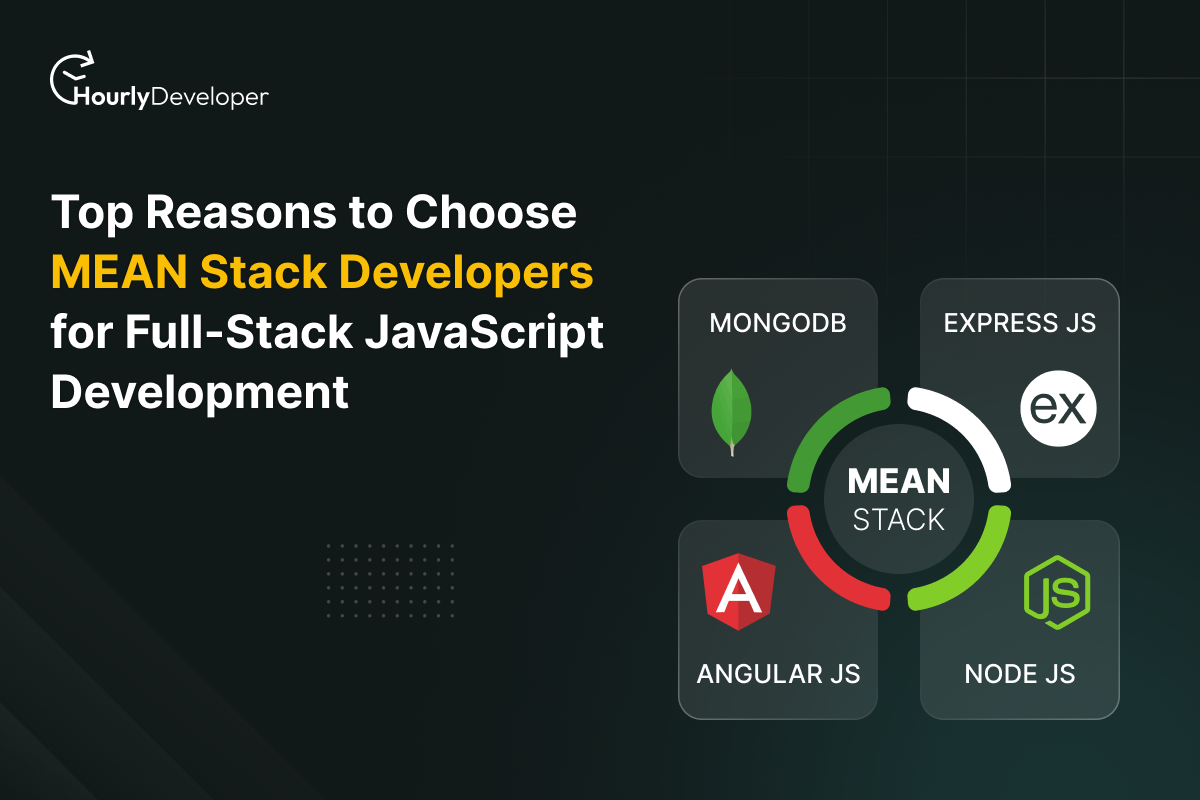


Every app or website you use daily feels smooth because of the right technology and a skilled development team behind it. Businesses today want web apps that are fast to build, easy to manage, and ready to scale—and that’s where MEAN Stack developers come in. Using a single language, JavaScript, MEAN Stack simplifies development, reduces costs, and speeds up delivery. In this blog, we’ll explain why choosing MEAN Stack developers is a smart decision, even if you’re not from a technical background.
1.What Is MEAN Stack?
Think of a web application like a restaurant. You have customers, orders, staff, and a kitchen working together behind the scenes. MEAN Stack works in a similar way—it brings four tools together so a website or app runs smoothly from start to finish.
Here’s what each part does, in very simple terms:
- MongoDB is where all the information is stored. This includes user details, orders, messages, or any data the app needs to remember.
- Express.js acts like a traffic manager. It decides how information moves between the user and the server.
- Angular is what users actually see on their screens. Buttons, forms, pages, and layouts are all created here.
- Node.js is the engine running in the background. It makes sure everything works fast and handles multiple users at the same time.
The key thing to remember is this:
2.MEAN Stack uses just one language—JavaScript—everywhere
Because of this, businesses prefer JavaScript Full-Stack Developers who can build, manage, and update the entire application. Instead of hiring separate experts for different tasks, one skilled team can handle everything—making development faster, simpler, and more cost-effective.
3.What Do MEAN Stack Developers Do?
A MEAN Stack developer is someone who can take care of an entire web application—from what users see on the screen to what happens behind the scenes. You can think of them as a one-stop solution for building and managing a website or web app.
Here’s what they actually do,
- Design the user interface: They create the pages, buttons, forms, and layouts that users click and interact with. The goal is to make the app easy to use and visually clean.
- Build the backend logic: This is the “brain” of the application. It decides how the app works, processes user actions, and makes sure everything runs correctly.
- Connect databases: They set up where data is stored—like user profiles, login details, orders, or content—and ensure it’s saved safely and retrieved quickly.
- Handle APIs and servers: APIs help different systems talk to each other. MEAN developers manage this communication so data flows smoothly between users and the server.
- Maintain and scale applications: As your business grows, your app needs updates, new features, and the ability to handle more users. MEAN developers manage these changes without breaking the system.
In simple words, instead of hiring separate people for design, backend, and database work, one MEAN Stack developer can handle it all. This makes development faster, reduces costs, and gives businesses a smoother, more efficient way to build modern web applications.
4.Why MEAN Stack Is Still Relevant in 2026
Technology keeps changing, but some foundations stay strong—and JavaScript is one of them. Even as we move into 2026 and the coming years, JavaScript continues to power a huge part of the internet. In fact, industry reports consistently show that over 95% of websites use
JavaScript in some form, making it the most widely used programming language in the world.
This is one big reason why MEAN stack is still highly relevant.
Since MEAN stack uses JavaScript from start to finish, businesses don’t have to worry about their technology becoming outdated too quickly. It’s already aligned with how modern web development works today—and where it’s headed tomorrow.
Here’s why MEAN stack continues to make sense:
- JavaScript still dominates web and app development: From websites to mobile apps and even smart devices, JavaScript is everywhere. This means MEAN-based applications remain easy to update and support long-term.
- Cloud platforms work smoothly with MEAN stack: Most businesses today use cloud services. MEAN stack fits naturally with cloud environments, making apps easier to host, scale, and manage.
- AI-powered features integrate easily:Node.js works well with AI tools, APIs, and data services, making it easier to add chatbots, recommendations, or automation.
- Real-time applications depend on MEAN: Apps like live chats, dashboards, fintech platforms, and online learning tools rely heavily on MEAN stack’s real-time capabilities.
Because of all this, choosing a MEAN Stack Development Company is a future-ready decision—one that supports growth, innovation, and long-term stability without unnecessary complexity.
5.Top Reasons to Choose MEAN Stack Developers for Full-Stack JavaScript Development
Now that we understand what MEAN stack is and why it matters, let’s look at why so many businesses choose MEAN Stack developers for full-stack JavaScript development. The benefits go beyond just technology—they directly impact cost, speed, scalability, and long-term maintenance.
Below are the key reasons why hiring MEAN Stack developers has become a preferred choice for modern web applications.
1.One Language for the Entire Application
The biggest strength of the MEAN stack is that it uses one single language—JavaScript—everywhere. This means the same language is used to build what users see on the screen, how the app works in the background, and how data moves between systems.
For businesses, this is a big relief. Instead of juggling multiple technologies and specialists, everything stays consistent. Fewer technologies mean fewer chances of confusion, fewer mistakes, and smoother development overall.
Because the entire system speaks the same “language,” teams communicate better, fix issues faster, and make changes more easily. When you hire MEAN Stack developers, your project becomes simpler to manage from day one and much easier to maintain in the long run.
2. Faster Development and Quicker Launch
In 2026, timing can make or break a business idea. If your product takes too long to launch, competitors may get ahead.
MEAN stack helps speed things up because developers can reuse code, test features quickly, and deploy updates faster. There’s no need to wait for different teams to finish their part—everything moves together.
For startups, this means launching an MVP quickly. For established businesses, it means rolling out updates without delays. Simply put, MEAN stack helps turn ideas into live products faster, giving businesses a real competitive edge.
3. Cost-Effective Full-Stack Web Development
Hiring separate teams for frontend, backend, and database work can get expensive very quickly. Each role adds cost, coordination effort, and longer timelines.
With a MEAN stack, one skilled team can handle everything. This reduces hiring costs, lowers management overhead, and cuts long-term maintenance expenses.
That’s why many companies choose to hire full stack developers with MEAN expertise. You get full functionality without paying for unnecessary complexity, making it a smart option for businesses of all sizes.
4. Scalable Applications for Growing Businesses
Scalability means your application won’t break or slow down as more users join.
MEAN stack is designed to grow smoothly. Whether you have hundreds of users today or plan to reach millions tomorrow, the system can handle increasing traffic and data without major changes.
This is especially important for businesses that expect growth. A professional Full Stack Development Company ensures your app is built with future expansion in mind—so you don’t need to rebuild everything later.
5. Perfect for Real-Time Applications
Today’s users expect instant updates. They don’t want to refresh pages or wait for information to load.
MEAN stack is ideal for applications where things need to update instantly, such as chat apps, live dashboards, online classrooms, or financial platforms. Node.js handles real-time data very efficiently, even when many users are active at once.
This makes JavaScript Full-Stack Developers extremely valuable for building modern, interactive digital products that feel fast and responsive.
6. Strong Community and Long-Term Support
MEAN stack is backed by a massive global developer community. This means problems are solved quickly, tools keep improving, and security updates are released regularly.
For businesses, this translates into long-term stability. You’re not relying on a niche technology that might disappear. Instead, you’re using a stack that’s widely trusted and continuously improved.
Working with a reliable MEAN Stack Development Company also means you’ll get ongoing support, updates, and improvements as your application evolves.
7. Easy Integration with AI and Modern Technologies
As AI becomes more common, businesses want applications that can easily adopt smart features.
MEAN stack integrates smoothly with AI tools, chatbots, recommendation systems, and analytics platforms. Node.js works especially well as a backend for AI-powered services.
This means you can start simple today and add intelligent features later—without rebuilding your entire application. For future-focused businesses, this flexibility is a big advantage.
8. Clean, User-Friendly Interfaces
A good-looking and easy-to-use application keeps users engaged.
Angular, the frontend part of MEAN stack, helps create clean layouts, smooth navigation, and fast-loading pages. Users find it easier to explore, interact, and return to the app.
When users enjoy the experience, they stay longer and trust your brand more. That’s why MEAN stack is not just about functionality—it’s also about creating better user experiences.
9. Easier Maintenance and Updates
After an app is built, the real work begins—updates, fixes, and improvements.
MEAN stack makes maintenance easier because everything is built using the same language and a modular structure. Developers can update one part without affecting the entire system.
When you hire MEAN Stack developers, adding new features or fixing bugs becomes faster, safer, and less expensive over time.
10. Secure and Reliable Applications
Security is a top concern, especially for apps handling payments, personal data, or business information.
MEAN stack supports secure APIs, encrypted data, and controlled user access. Experienced Full-Stack Web Development teams build security into the application from the start, not as an afterthought.
This ensures your app stays reliable, compliant, and trustworthy for users.
11. Ideal for Startups and Enterprises Alike
MEAN stack is flexible enough to serve different business needs.
Startups can use it to quickly test ideas and launch MVPs. Growing companies can scale features as demand increases. Large enterprises can modernize old systems with a more efficient approach.
This adaptability makes MEAN stack suitable across industries and business sizes.
12. Easier Hiring and Team Expansion
JavaScript is one of the most widely known programming languages in the world. This makes hiring MEAN developers easier and faster compared to rare or complex technologies.
For businesses, this means less hiring risk and smoother team expansion. A trusted Full Stack Development Company can quickly provide skilled developers whenever you need to scale.
13. Cloud-Friendly Architecture
Most modern applications run on the cloud, and MEAN stack fits perfectly into cloud environments.
It works smoothly with major cloud platforms, making deployment, scaling, and monitoring easier and more affordable. Businesses can pay only for what they use and expand when needed.
This cloud compatibility makes MEAN stack practical and cost-efficient.
14. Better Collaboration Between Teams
Since frontend and backend teams use the same language, collaboration improves naturally.
There’s less confusion, faster problem-solving, and clearer understanding across teams. This leads to better-quality applications delivered on time and within budget.
15. Long-Term Return on Investment (ROI)
MEAN stack is not just about building an app—it’s about building something that lasts.
Over time, businesses save money on maintenance, enjoy easier upgrades, and deliver better performance to users. Happy users stay longer, recommend your product, and help your business grow.
That’s why MEAN stack delivers strong long-term ROI and sustainable digital growth.
6.MEAN vs Other JavaScript Stacks: A Practical Comparison
| Feature / Factor | MEAN Stack | MERN Stack | MEVN Stack | Traditional Multi-Stack Setup |
| Frontend Framework | Angular | React | Vue.js | Multiple (varies) |
| Backend Technology | Node.js + Express | Node.js + Express | Node.js + Express | Different backend languages |
| Database | MongoDB | MongoDB | MongoDB | SQL / NoSQL mix |
| Language Used | JavaScript everywhere | JavaScript everywhere | JavaScript everywhere | Multiple languages |
| Ease for Large Applications | Very strong | Strong | Moderate | Complex to manage |
| Learning Curve | Moderate | Easy–Moderate | Easy | High |
| Best for Enterprise Projects | Excellent | Good | Moderate | Depends on setup |
| UI Structure & Consistency | Highly structured | Flexible | Flexible | Often inconsistent |
| Real-Time Performance | Excellent | Excellent | Very good | Depends on tech |
| Scalability | High | High | Medium–High | Costly to scale |
| Development Speed | Fast | Very fast | Fast | Slow |
| Maintenance Effort | Easy | Easy | Easy | High |
| Team Collaboration | Very smooth | Smooth | Smooth | Often difficult |
| Cost Efficiency | High | High | High | Low |
| Future Readiness | Very strong | Very strong | Strong | Risky |
In nutshell,
- MEAN Stack is ideal for large, structured, enterprise-level applications where long-term stability matters.
- MERN Stack is great for flexible, UI-heavy applications and startups.
- MEVN Stack suits lightweight, fast-moving projects.
- Traditional setups use multiple languages and teams, which increases cost and complexity.
7.MEAN Stack for Different Business Models
Different businesses have different needs, and the MEAN stack fits well across many of them. Here’s how it works for common business models:
1.Startups building an MVP
-
- Helps launch a basic working product quickly
- Lower development cost with one full-stack team
- Easy to make changes based on user feedback
- Ideal for testing ideas without big investment
2. Enterprises modernizing legacy systems
-
- Replaces slow, outdated software with modern web apps
- Improves speed, user experience, and performance
- Easier future updates without rebuilding everything
- Supports secure and scalable enterprise-level systems
3. SaaS platforms needing flexibility and speed
-
- Handles many users at the same time smoothly
- Allows frequent feature updates and improvements
- Supports real-time data and cloud-based scaling
- Helps SaaS businesses grow without technical limits
In short: MEAN stack works well for businesses at every stage—starting new, upgrading old, or scaling fast.
8.Conclusion
So, there you have it! MEAN Stack developers aren’t just coders—they’re like the all-in-one team that can take your web application from an idea to a fully working product. They handle everything: the look and feel, how it works behind the scenes, and even how it grows as more people use it.
Think of it this way: instead of hiring separate teams for design, backend, and databases, one MEAN Stack developer (or a small team) can do it all. That means faster results, lower costs, and fewer headaches.
Whether you’re a startup testing your first product, an established company upgrading old systems, or running a SaaS platform that needs speed and flexibility, MEAN Stack has you covered. Plus, it’s future-ready—so your app won’t feel outdated next year.
Curious to see your idea come to life? Hire MEAN Stack developers and build a web application that’s smooth, reliable, and ready to grow with your business. Your users—and your future self—will thank you!

Nikhil Patel, our dynamic Director, charts our course with innovative fervor and strategic acumen. With a sharp eye for opportunity, he steers our company's ascent with resolute determination. Nikhil's empathetic leadership unites us, igniting a collective drive for greatness and propelling us toward boundless success.
Frequently Asked Questions
Absolutely. MEAN Stack is built to handle many users at the same time, making it perfect for high-traffic websites, online marketplaces, and real-time apps.
Yes. MEAN Stack can work alongside tools like payment gateways, social media APIs, AI platforms, and analytics tools, making it very flexible for modern business needs.
Yes. MEAN Stack developers can migrate or modernize older applications to this stack, improving speed, security, and maintainability without completely rebuilding from scratch.
Maintenance is simpler because the same language is used across the app. Developers can easily fix bugs, add new features, and update the system without breaking other parts of the application.
It depends on experience and location. Junior developers typically cost $20–$50/hour, mid-level $50–$100/hour, and senior developers $100–$150+/hour. In India, rates can be as low as $15–$35/hour. Full-time developers may cost $3,000–$9,000/month depending on skills and region.
Table of content
- Introduction
- What Is MEAN Stack?
- MEAN Stack uses just one language—JavaScript—everywhere
- What Do MEAN Stack Developers Do?
- Why MEAN Stack Is Still Relevant in 2026
- Top Reasons to Choose MEAN Stack Developers for Full-Stack JavaScript Development
- MEAN vs Other JavaScript Stacks: A Practical Comparison
- MEAN Stack for Different Business Models
- Conclusion
Hire Developers!
Find exceptional developers at Hourlydeveloper. Get the expertise, solutions, and teamwork you need for success. Hire developers easily and boost your projects today!