Web development today requires speed, scalability, and security—not just good design. MEAN Stack developers are becoming key to building future-ready web applications. This blog explains how they are shaping the future of modern web development in simple terms.
1.What Is MEAN Stack Development?
To understand the role of MEAN Stack Developers, let’s first break down what the MEAN stack actually is.
The term MEAN stands for:
- M – MongoDB: A database that stores data in a flexible format, unlike traditional databases.
- E – Express.js: A tool that helps servers talk to your web applications.
- A – Angular: A framework that builds the visible parts of a website or web app.
- N – Node.js: A platform that runs JavaScript on the server side.
All four parts use JavaScript, a language that works in web browsers and on servers, making development smoother and more efficient.
When these technologies work together, they allow developers to create full web applications — from the front end (what users see) to the back end (what happens behind the scenes). This is what we call Full-Stack Web Development, and developers who specialize in it are known as MEAN Stack Developers.
2.Who Are MEAN Stack Developers?
A MEAN Stack Developer is someone who writes code using all parts of the MEAN stack. In simple terms, this means they can:
- Build the visible parts of a website with Angular.
- Create server logic using Node.js and Express.js.
- Manage data using MongoDB.
- Bring everything together with JavaScript from start to finish.
These developers are a type of full-stack web developer — professionals capable of handling both front-end and back-end work, which makes them highly valuable in today’s web projects.
3.Web Development Is Moving Toward “One Language, Many Solutions”
One of the biggest changes happening in web development is simplification without losing power.
Earlier:
- Different languages for frontend
- Different languages for backend
- Separate teams for each layer
Now:
- One core language
- Faster coordination
- Less confusion
This is exactly where MEAN stack shines.
Since MEAN stack uses JavaScript across the entire application, development becomes smoother and more predictable. When companies hire MEAN Stack Developers, they are essentially hiring professionals who can manage the full digital flow — from what users see to how data is processed behind the scenes.
In the future, businesses will prefer leaner teams that can do more, rather than large fragmented teams. MEAN stack supports this shift naturally.
4.Why Future Web Products Need Full-Stack Thinking, Not Isolated Skills
Modern web products are no longer static pages. They are:
- Dashboards
- SaaS platforms
- Marketplaces
- Real-time tools
- AI-powered interfaces
These products don’t work in silos.
A small change in the user interface can impact:
- Server logic
- Data storage
- Performance
- Security
MEAN Stack Developers think in systems, not fragments. This full-stack thinking is critical for future web development because:
- Features roll out faster
- Bugs are easier to trace
- Products stay consistent
- Scaling becomes simpler
That’s why businesses increasingly choose to hire web developers with MEAN stack expertise instead of hiring separate specialists for each layer.
5.MEAN Stack and the Rise of “Always-On” Web Applications
The future internet is always active.
Users expect:
- Instant loading
- Live updates
- No page refresh
- Continuous interaction
Social platforms, delivery apps, finance dashboards, and admin panels all demand this experience.
Node.js — a core part of MEAN — is designed for non-stop, real-time operations. It handles multiple requests at the same time without slowing down, which is essential for modern apps.
MEAN Stack Developers are playing a big role in building:
- Live tracking systems
- Chat-based platforms
- Notification-driven apps
- Streaming dashboards
As more businesses move toward real-time digital services, MEAN stack becomes a long-term investment, not a short-term choice.
6.Why Scalability Is No Longer Optional in Web Development
Earlier, businesses built websites and then “upgraded later.”
That approach no longer works.
Today:
- A startup can go viral overnight
- Traffic spikes are unpredictable
- Downtime equals lost trust
MEAN stack is built with scalable architecture at its core. MongoDB allows flexible data storage, while Node.js handles increasing user loads efficiently.
This is why companies actively look for:
- MEAN Stack Developers for scalable web development
- Developers who can future-proof platforms from day one
Instead of rebuilding later, MEAN stack helps businesses grow without breaking.
7.How MEAN Stack Supports Faster Experimentation and Innovation
The future of web development is not fixed — it’s experimental.
Businesses now:
- Test ideas quickly
- Launch MVPs
- Iterate based on user feedback
- Improve continuously
MEAN stack enables rapid experimentation because:
- Development cycles are shorter
- Changes are easier to implement
- Features can be rolled back quickly
This flexibility allows companies to innovate without fear. When you hire MEAN Stack Developers for future web projects, you’re choosing a setup that welcomes change instead of resisting it.
8.MEAN Stack Developers and API-First Web Development
Modern web products are rarely standalone.
They connect with:
- Mobile apps
- Third-party tools
- Payment gateways
- Analytics platforms
- AI services
This has led to the rise of API-first development, where applications are designed to communicate smoothly with other systems.
MEAN stack works extremely well with APIs. Express.js and Node.js make API creation lightweight and fast, while MongoDB handles dynamic data structures easily.
MEAN Stack Developers are shaping the future by:
- Building integration-ready platforms
- Designing flexible data flows
- Ensuring systems can evolve
This is especially important for SaaS products and enterprise applications.
9.Why MEAN Stack Is a Smart Choice for Long-Term Product Maintenance
One overlooked part of web development is maintenance.
Websites don’t end at launch. They require:
- Updates
- Performance tuning
- Security patches
- Feature additions
MEAN stack simplifies long-term maintenance because:
- One language reduces dependency on multiple specialists
- Codebases are easier to understand
- Updates are faster and safer
For businesses, this means:
- Lower maintenance costs
- Faster upgrades
- Less technical debt
This is a key reason why companies partner with a Mean Stack Development Company instead of assembling temporary teams.
10.MEAN Stack Developers in the Age of AI-Powered Web Experiences
AI is becoming a standard expectation, not a luxury.
Web platforms now include:
- Smart search
- Recommendation engines
- Chat assistants
- Predictive analytics
MEAN stack integrates well with AI services and APIs. Node.js is commonly used to connect machine learning models to live web interfaces.
MEAN Stack Developers help bridge the gap between:
- Data intelligence
- User interaction
- Real-time decision making
As AI becomes more accessible, MEAN stack will play a key role in delivering intelligent web experiences without heavy infrastructure.
11.Why Businesses Prefer MEAN Stack for Global and Remote Users
Future web platforms are borderless.
Users can be:
- In different time zones
- On different devices
- Using varying internet speeds
MEAN stack supports:
- Lightweight APIs
- Efficient data handling
- Smooth performance even under load
This makes it ideal for:
- Global SaaS products
- Remote collaboration tools
- International marketplaces
When businesses hire MEAN Stack Developers, they’re preparing their platforms for a global audience from day one.
12.The Growing Demand for MEAN Stack Developers
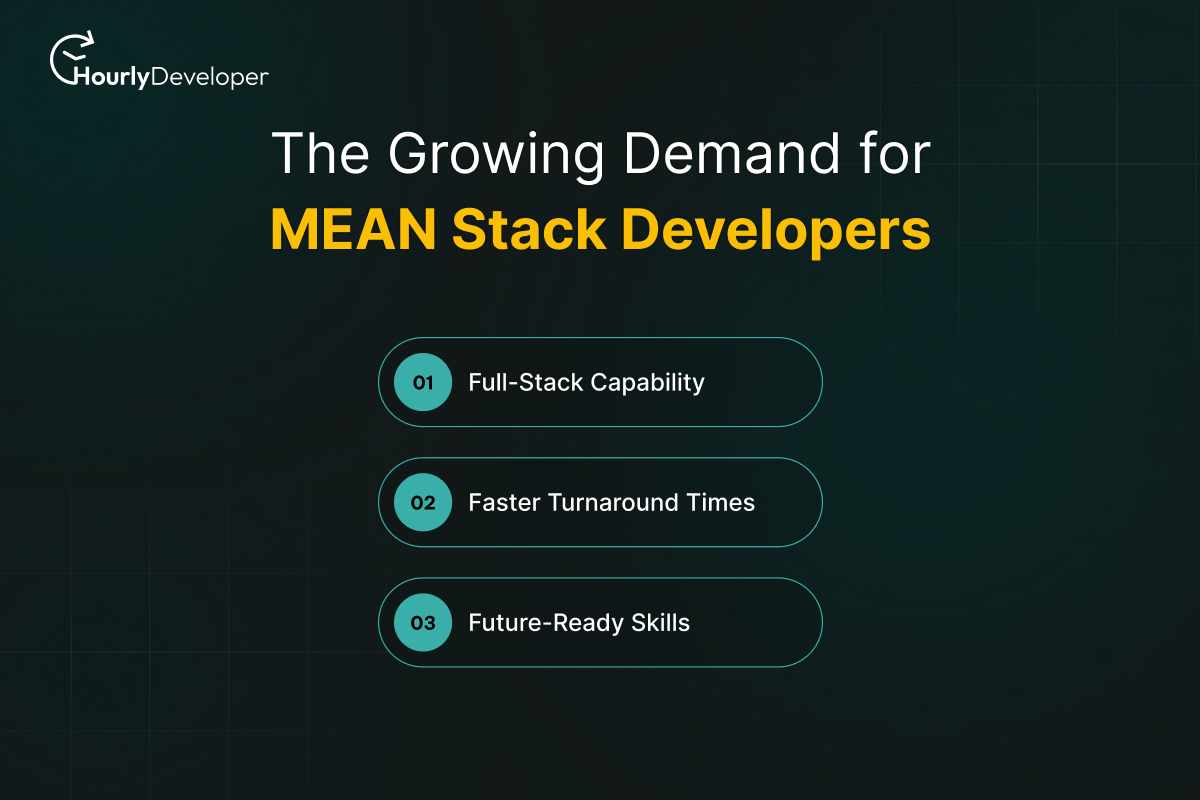
The demand for MEAN Stack Developers is rising day by day. Businesses around the world are looking to hire MEAN Stack Developers because they offer a complete solution in a single toolkit. These developers can work on both the front-end and back-end, which is particularly attractive for companies that want seamless integration and fewer communication gaps between development teams.
Here’s why companies want to hire MEAN stack talent:
1. Full-Stack Capability
Instead of hiring several specialists for front-end, back-end, and database work, companies can hire a MEAN Stack Developer who does it all. This reduces hiring costs and simplifies project management.
2. Faster Turnaround Times
MEAN stack experts accelerate development because they understand how different components work together. Projects reach completion faster, which leads to quicker business results.
3. Future-Ready Skills
With web technologies constantly evolving, MEAN stack developers continue to learn and adapt. Their skills in JavaScript and related technologies will be valuable for years to come.
Whether you need to hire web developers for a startup or want to hire MEAN Stack Developers for future web projects, having professionals skilled in MEAN stack gives your team a strong advantage.
13.MEAN Stack as a Cost-Smart Future Investment
Future planning isn’t just about technology — it’s about cost control.
MEAN stack helps businesses:
- Reduce development overhead
- Minimize team size
- Avoid repeated rewrites
- Scale without rebuilding
For startups, this means faster break-even. For enterprises, it means predictable long-term costs.
This cost efficiency is why many organizations prefer to hire web developers with MEAN stack expertise rather than maintaining large, fragmented teams.
14.Why MEAN Stack Developers Are Becoming Strategic Partners, Not Just Coders
The role of developers is evolving.
MEAN Stack Developers today:
- Understand business logic
- Think in workflows, not just code
- Contribute to product decisions
- Help shape user experience
They are no longer just implementers — they are strategic contributors.
Companies that work with an experienced Mean Stack Development Company often gain:
- Better architectural decisions
- Faster product maturity
- More stable platforms
This shift will define how future web teams are built.
15.Who Should Consider MEAN Stack for Future Web Development?
MEAN stack is especially suitable for:
- Startups building MVPs
- SaaS platforms
- Data-driven dashboards
- Enterprise internal tools
- Marketplaces and portals
- Long-term digital products
If your goal is growth, flexibility, and longevity, MEAN stack is a strong choice.
16.Industries That Benefit From MEAN Stack Development
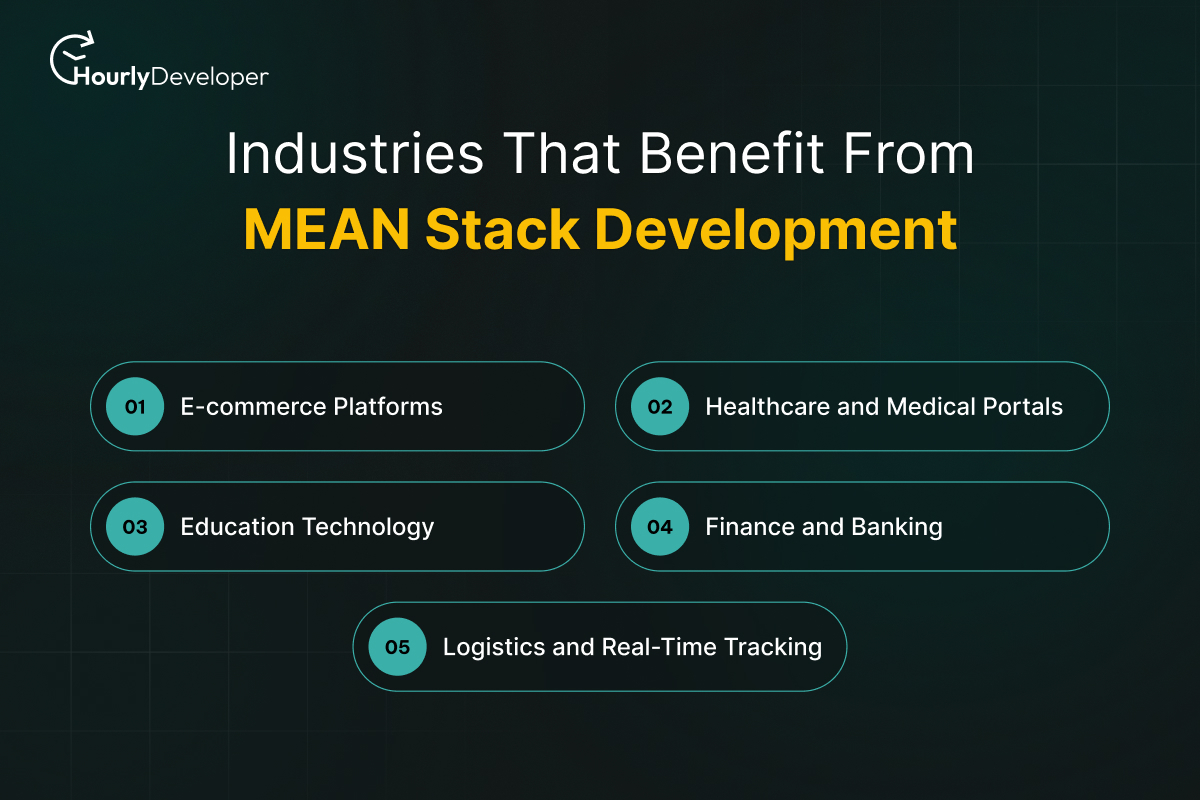
MEAN stack developers are not limited to tech companies. Their skills are valuable across different industries, including:
1.E-commerce Platforms
Online stores use MEAN stack apps to provide fast search, secure checkout systems, and personalized user experiences.
2. Healthcare and Medical Portals
In healthcare, apps need to handle large amounts of data securely and respond quickly. MEAN stack solutions offer both speed and scalability.
3. Education Technology
Online learning platforms rely on real-time communication, dynamic content, and interactive dashboards — all achievable with MEAN.
4. Finance and Banking
Secure logins, real-time updates, and responsive interfaces are important here, and MEAN stack technologies support these needs.
5. Logistics and Real-Time Tracking
Transport and delivery services benefit from real-time data feeds and scalable systems, making MEAN stack a good fit.
Across all these industries, companies may choose to hire MEAN Stack Developers for scalable web development that meets both current requirements and future growth.
17.Final Thoughts
The future of web development demands speed, adaptability, and intelligence — and MEAN Stack Developers are uniquely positioned to deliver all three.
They are shaping how web products:
- Scale
- Integrate
- Evolve
- Perform
Choosing to hire MEAN Stack Developers for future web projects is not just a technical decision — it’s a strategic one.
As businesses prepare for constant digital change, MEAN stack stands out as a practical, future-ready foundation for full-stack web development.
 Back to Blog