1.What Is an AI Reputation Management System?
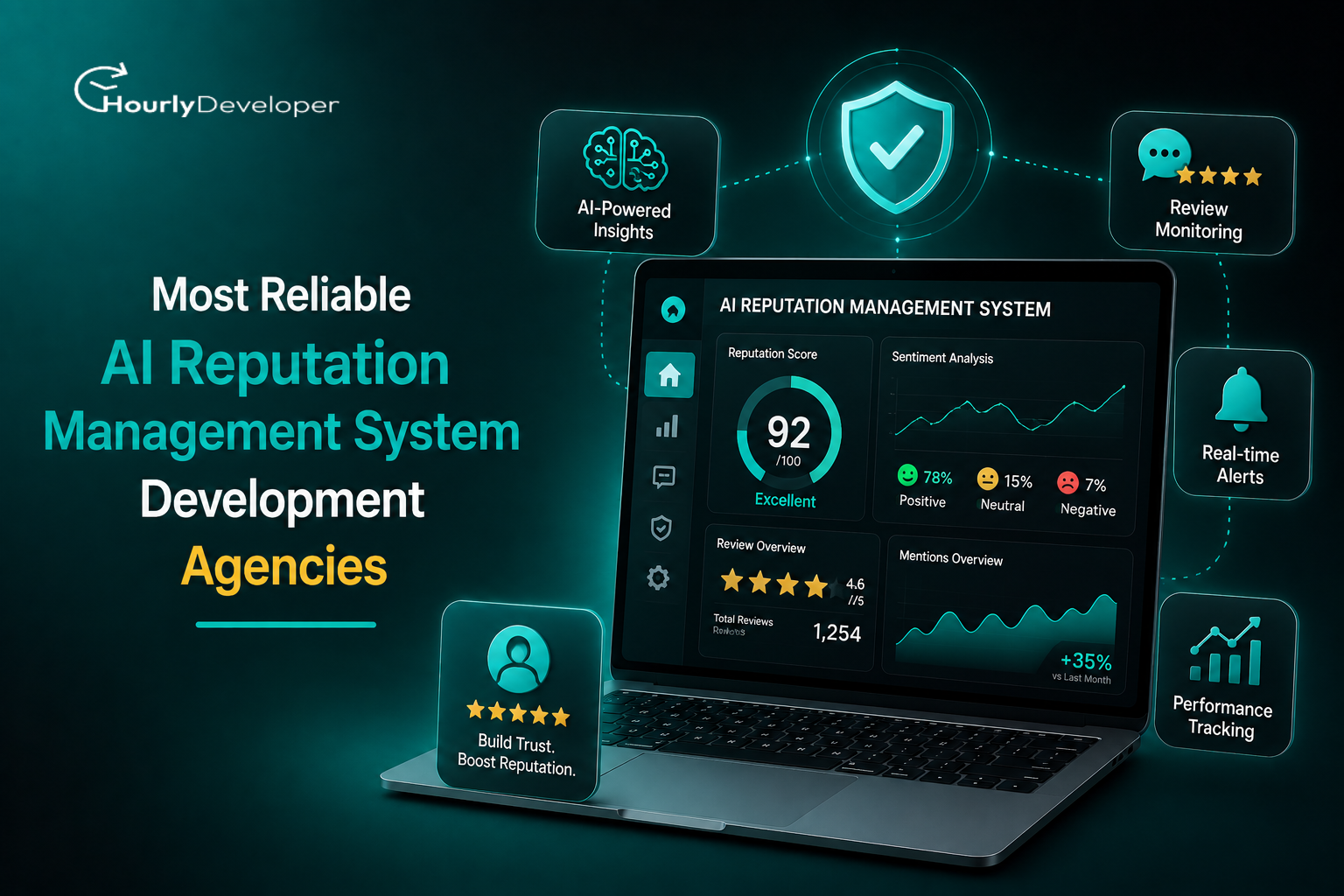
An AI Reputation Management System is software that uses machine learning and natural language processing to track, analyze, and respond to what people say about a brand across the internet. Instead of someone manually checking Google reviews, social mentions, and forum threads every morning, the system does this continuously and only flags what genuinely needs a human’s attention.
At its core, the system pulls in data from reviews, social posts, news articles, and support tickets, then scores sentiment, spots patterns, and in many cases drafts a response for a human to approve. Some setups go a step further and auto publish replies for low risk situations, freeing the team to focus on complaints that actually need judgment and empathy.
5.The Most Reliable AI Reputation Management System Development Agencies in 2026
Here is the list. We have kept the descriptions practical, covering what each company focuses on, the kind of engagement model they usually offer, and what tends to stand out to clients comparing options.
1. HourlyDeveloper
HourlyDeveloper works with businesses that want flexibility more than anything else. Instead of locking clients into rigid fixed price contracts, they offer hourly and dedicated developer models, which works well for reputation management projects that evolve as new channels or features get added. Their team covers backend architecture, API integrations with review platforms, and the machine learning components needed for sentiment scoring. Clients who are still figuring out their exact requirements often start here because the engagement model lets scope shift without renegotiating a whole contract. They also offer post launch support, which matters for a system that needs regular model tuning as customer language and slang keep changing. For founders comparing costs across several vendors, transparent hourly billing also makes it easier to track exactly where the budget is going, rather than paying for a fixed package that may include features a smaller business does not actually need yet.
2. Appinventiv
Appinventiv is a well known name in enterprise AI development, and their reputation management builds usually come as part of a broader customer experience platform. They tend to work with mid size to large businesses that need the system tied into existing CRM and analytics tools rather than running as a standalone tool. Their strength is in combining AI models with solid mobile and web app development, so the reputation dashboard clients get is usually polished and easy for non technical teams to use day to day. They also run internal QA cycles before handoff, which reduces the number of bugs a client’s team has to catch after the system goes live.
3. LeewayHertz
LeewayHertz has built a name around applied AI, and reputation management systems fit naturally into their generative AI and NLP work. They are a good fit for businesses that want custom trained models rather than an off the shelf sentiment engine, especially brands in niche industries where generic models misread industry specific language. Expect a more technical, consultative sales process here, which suits founders who already have a clear idea of what they want built. Their engineers are usually comfortable explaining model architecture in plain language, which helps non technical stakeholders stay involved in key decisions instead of feeling left out of the build.
4. Backend Development Company
As the name suggests, Backend Development Company focuses heavily on the infrastructure side, which is often the part clients underestimate. A reputation management system pulling data from dozens of sources needs a backend that can handle high volume API calls, real time processing, and reliable data storage without lag. This agency is a strong pick for businesses that already have a front end or dashboard vision and mainly need a dependable engine running underneath it, including the data pipelines and alerting logic that keep everything working smoothly. They also pay close attention to uptime and failover planning, so a spike in review traffic during a busy season does not bring monitoring to a halt right when it matters most.
5. Markovate
Markovate specializes in custom AI and machine learning products, and their reputation management work tends to lean into predictive analytics. Clients who want a system that does more than react, one that actually forecasts sentiment trends before they show up in raw numbers, tend to gravitate here. They typically work on a project basis with clearly scoped milestones, which appeals to businesses that prefer structured timelines over open ended engagements. Their team also spends time on model explainability, so stakeholders understand why the system flagged a particular trend instead of just trusting a black box output.
6. ScienceSoft
ScienceSoft has decades of software consulting experience, and that shows in how methodically they approach reputation management builds. They usually start with a discovery phase to map out every channel a brand needs monitored, from Google reviews to niche industry forums, before writing a line of code. This makes them a reliable choice for larger organizations that need thorough documentation, compliance considerations, and a predictable delivery process rather than a fast and loose build. Their reporting structure is also useful for businesses that need to show reputation metrics to a board or investors on a regular schedule.
7. HireAIDevelopers
HireAIDevelopers is built around exactly what the name promises, connecting businesses with AI specialists on flexible hiring models. For reputation management projects, this usually means assembling a small dedicated team covering NLP, backend, and dashboard development without the overhead of a full agency engagement. It suits startups and growing companies that want direct access to the developers actually writing the code, plus the option to scale the team up or down as the project matures. Because the team is dedicated rather than shared across many clients, communication tends to be faster and requirement changes get absorbed without long delays.
8. Osiz Technologies
Osiz Technologies has a broad AI and blockchain portfolio, and their reputation management offerings often include social listening tools built on top of their existing analytics stack. They work with clients across e commerce, hospitality, and fintech, industries where public sentiment moves fast and directly affects revenue. Their pricing tends to be competitive, which makes them a common pick for businesses balancing budget with the need for solid AI capability. They also offer white label options in some cases, which can matter for agencies that want to resell reputation monitoring under their own brand.
9. Netguru
Netguru brings a strong design and product engineering background to reputation management builds, which means the systems they deliver tend to feel less like internal tools and more like polished products. They work well with businesses that care about how the monitoring dashboard actually looks and feels for the team using it daily, not just what happens behind the scenes. Their process usually includes close collaboration through agile sprints, so clients see progress regularly instead of waiting for one big reveal. Regular sprint demos also make it easier to catch misaligned expectations early, before they turn into costly rework later in the project.
10. HireFullStackDeveloperIndia
HireFullStackDeveloperIndia focuses on full stack teams available at competitive offshore rates, and reputation management is one of the more common project types they take on. Because the team handles both front end dashboards and backend data processing, clients get a single point of contact instead of coordinating multiple vendors. This model appeals to businesses that want cost efficiency without giving up direct communication with the developers building the actual product. Time zone overlap is usually manageable too, with most teams offering a few hours of daily overlap for calls with clients based in the US or Europe.
11. Chetu
Chetu is known for building highly customized software across many industries, and their reputation management systems reflect that same flexibility. They rarely push a one size fits all product, instead building around whatever workflow a client already has in place, which suits businesses with unusual requirements or legacy systems that need to stay connected. Support after launch is one of their consistent strengths, useful since sentiment models need occasional retraining. Their large internal team also means they can usually absorb scope changes mid project without needing to bring on new external contractors.
12. Intellectsoft
Intellectsoft works mostly with mid market and enterprise clients, and their reputation management projects usually sit inside a larger digital transformation initiative. They bring strong data engineering skills to the table, which matters when a brand is trying to unify reputation data with sales and operations data for a single view of business health. Expect a more formal engagement process, including dedicated project managers and regular reporting cadences. This structure suits organizations with multiple internal stakeholders who all need visibility into project status without chasing updates manually.
13. Debut Infotech
Debut Infotech has grown a reputation for AI and Web3 development, and their reputation management builds often include chatbot integration for automatically handling routine review responses. They tend to work with small and mid sized businesses looking for a reasonably priced entry point into AI powered reputation tools, without needing a massive upfront investment. Their team is generally responsive during the build phase, which shortens the usual back and forth on requirements. They also offer phased rollouts, letting clients launch monitoring for one or two channels first before expanding to the full platform.
14. Space-O Technologies
Space-O Technologies has built a name in mobile first AI products, so their reputation management systems often come with strong mobile app components alongside the standard web dashboard. This matters for businesses whose teams need to check and respond to reviews on the go rather than only from a desktop. They typically offer fixed scope packages for smaller projects, which helps founders budget accurately from the start. Push notification alerts for urgent reviews are a common feature in their builds, which helps small teams respond quickly even without a dedicated reputation manager on staff.
15. Matellio
Matellio takes a consultative approach, often starting engagements with a technical audit of a client’s existing reputation tools before recommending a build or an upgrade path. This makes them a sensible option for businesses that already have some monitoring in place but feel it is not delivering enough insight. Their reputation management systems usually emphasize dashboards non technical stakeholders can actually read and act on. They also tend to document the system architecture thoroughly, which makes it easier to hand maintenance over to an in house team later if a client chooses to bring development in house.
 Back to Blog